Field note · timber
Teak, thermowood or cedar for a cold tub that lives in Thai humidity
A wooden cold tub faces sun, rain, wet-dry cycles, termites and, near the coast, salt. Three timbers get proposed: teak, thermally modified wood and cedar. Here is what the people who make and grade them say, where their guidance stops, and how we choose for each tub.
What the outside of a cold tub really faces
The water is held by a smooth white fibreglass liner, so the timber is not the vessel; it is the skin. That skin lives in sun and rain, dries and wets every day, sits near termites and, in sea air, gets salt. The questions are durability outdoors, dimensional stability through the wet-dry cycle and how it looks after a year. See the teak cold tub page for the product.
Teak, as the references describe it
- Density and durability. Dried teak weighs about 655 kg per cubic metre; its heartwood is rated very durable and is called a benchmark for decay resistance (The Wood Database).
- Oils and silica. It feels slightly oily because of natural oils and contains silica, up to about 1.4 percent, which blunts cutting edges.
- Uses. Boatbuilding and exterior construction.
- Variation. Durability varies with the tree: plantation-grown teak is not automatically as durable as old-growth heartwood. Ask for the grade and the origin.
Thermally modified timber, as its association describes it
The International ThermoWood Association describes two classes: Thermo-S, the stability class, listed for interior cladding, sauna interiors and benches and limited exterior use; and Thermo-D, the durability class, with higher biological durability and weather resistance, listed for exterior cladding, decking and garden structures. Thermal modification darkens the timber, and the products are not intended for load-bearing structures. For a tub's exterior skin, Thermo-D is the relevant class; ask your supplier which class and species they are quoting.
Cedar and what sauna makers recommend
For sauna interiors, makers such as Tylö and Harvia name aspen, alder, spruce or thermally modified wood for panelling and benches; Finnleo lists abachi, hemlock or cedar for benches; Sawo describes aspen as soft and cool to the touch and western red cedar as naturally decay-resistant. No guide in that group lists teak. That is a point about benches, where skin touches the wood, not about a tub's outside. Spruce and other conifers can seep pitch when hot, which is normal, and a reason cabins and tubs use different timbers.
| Question | Teak | Thermally modified (Thermo-D) | Cedar |
|---|---|---|---|
| Outdoors in wet-dry cycles | very durable heartwood; grade and origin matter | designed for the durability class | naturally decay-resistant; softer, less forgiving in a monsoon |
| Weight and feel | dense, about 655 kg/m³ | lighter than teak; stable | light |
| Look | honey, silvers if left unoiled | uniform, darker brown | pale, weathers grey |
| Touch with bare skin | dense woods conduct heat more readily: fine on a tub, not for sauna benches | good in the stability class | good, as a bench timber |
| Ask your supplier | plantation or natural, grade, drying, origin documents | class (S or D), species, producer | grade, kiln drying, origin |
How we choose, tub by tub
- Exposed tub, full weather, coastal: teak or Thermo-D, with stainless fixings and a ventilated base.
- Covered terrace or a courtyard: either of those, or cedar if the tub is kept dry between uses.
- A darker, uniform look wanted: Thermo-D, with the client choosing the finish.
- Anything a sunburned shoulder will lean on: the white liner's rim and a smooth, rounded top edge, whatever the timber.
Care in a wet climate
Teak left alone weathers to silver-grey, which many owners like; an annual coat of oil keeps the honey colour. Thermally modified timber wants a finish suited to outdoors and a rinse after storms near the sea. Cedar wants the lid shut and a dry start to each season. For all of them, keep the base ventilated and off the soil.
The details that fail before the timber does
- Fixings. Marine-grade stainless steel (316 is the usual grade near the coast) throughout; plated or mild-steel screws streak and fail in humid sea air.
- End grain. The first place water enters a stave. It is sealed, and the stave tops are chamfered so water runs off instead of sitting.
- The base. A ventilated, raised base off the soil; timber in contact with damp ground invites termites whatever its species.
- The liner joint. Where the liner meets the top rail, the seal must flex with the timber; this is where a cheap tub starts to weep.
Provenance: ask for the paper
Timber of any species should arrive with documents showing where it was grown and by whom. For teak, ask whether it is plantation or natural-forest wood and for the supplier's origin documents; rules on felling and sale are a matter for Thai authorities and we state none here. Thermally modified timber should come with the producer's class and species named. A supplier who cannot say what the timber is has told you something.
What to do with the samples when they arrive
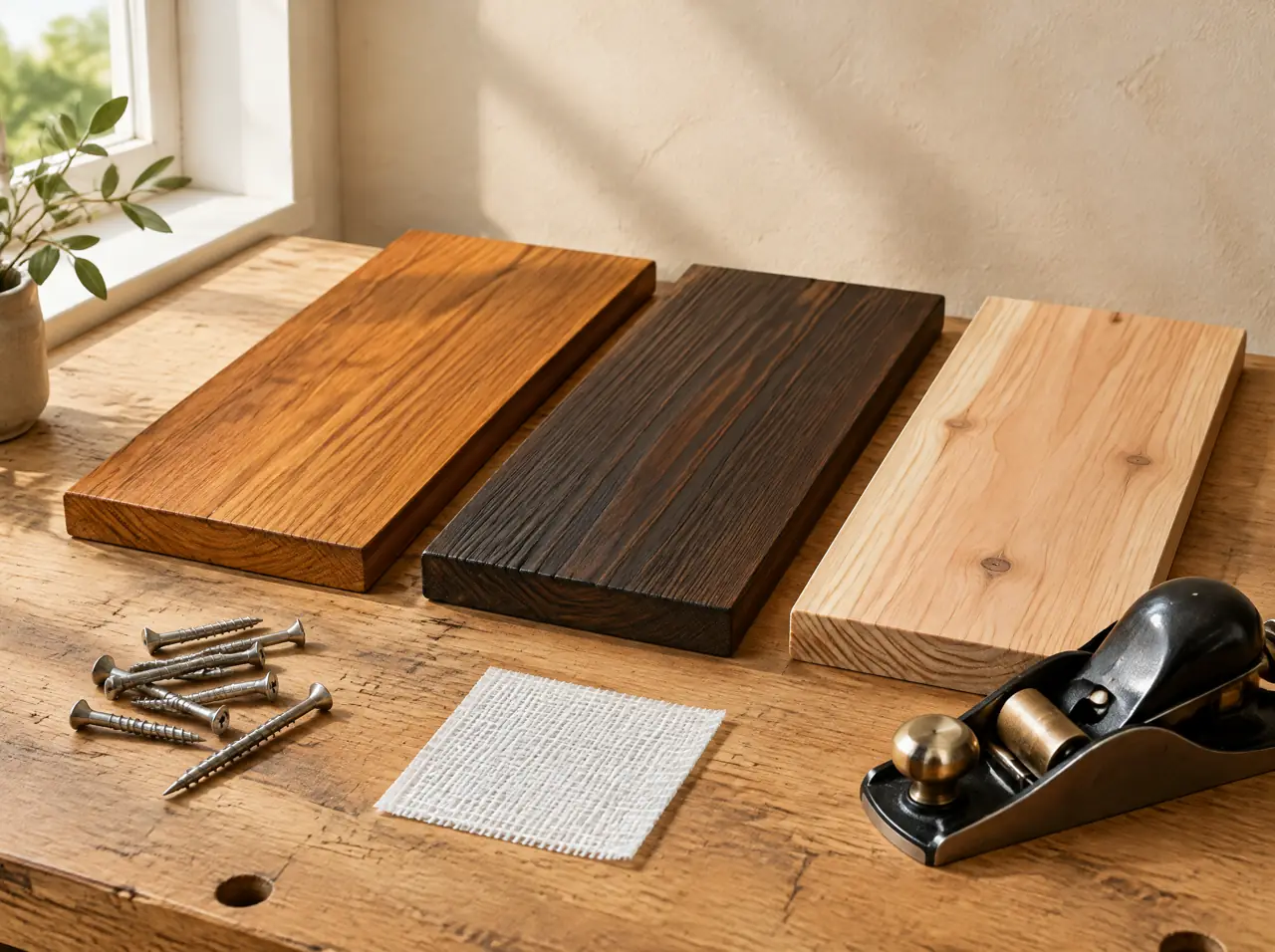
Samples are small boards of each candidate timber, with a corner of the white liner and a stainless screw. Leave them outside for a week with one half in the sun and the other in shade, wet them with a hose, and watch how each one dries, darkens and feels under a hand. A photograph lies about colour; a board on your own terrace does not.
Is teak better than thermowood for a cold tub?
For an exposed tub in strong sun and rain, a good grade of teak or Thermo-D thermally modified timber is the sensible choice, and neither is better in every case. Teak is denser and handsome; Thermo-D is uniform and stable. Which one wins depends on the site, the finish and the supplier's grade.
Why not teak inside a sauna?
Sauna makers' guides name other timbers for benches and walls, and teak is dense enough to conduct heat more readily than the usual choices. We use it on the outside of cabins and tubs, and cedar or similar low-density timber on benches.
Does thermowood need a different treatment near the sea?
It benefits from a suitable finish and a rinse after storms, and its fixings should be stainless. Ask the supplier about the class and the finish.
Does timber colour matter for heat gain?
A little. A dark thermally modified skin absorbs more sun than pale cedar or silvered teak, which is another reason shade matters more than species.
How long will a tub last?
We do not quote a lifespan, because it depends on grade, shade, finish and care. We offer two years of warranty plus a year of assisted service visits and write the care routine into the handover sheet.
More field notes
Next in the field notes
Glass saunas in the tropics
Where the sun is, what double glazing and coatings do, and which wall gets the glass: the choices that matter in Thai heat.
Look closer
Cold plunge in Phuket
Four heat sources, the dew point, the enclosure and a permit checklist for a Phuket plunge pool, with prices.
Look closer
Wellness amenities for villa rentals
The market numbers that carry a source, the uplift claims that do not, and a break-even you can run yourself.
Look closerFrom note to layout
Tell us where the tub stands and how much shade it gets; we recommend a timber and send real samples
Start with a photograph
Send the corner of the garden, the terrace or the plant room you have in mind. We answer with questions first, then a layout and a range.
Open WhatsAppOr build the circuit yourself