Retreats and yoga studios
From the yoga deck to the spa, the walk is the design
A retreat sells a rhythm: a dawn class, a slow breakfast, a long afternoon, an early night. The contrast circuit belongs inside that rhythm, a few steps from the deck, not in a separate building guests must plan to visit. We draw the pools, the cabin and the path as one sequence, and size them for a class of eight to sixteen.
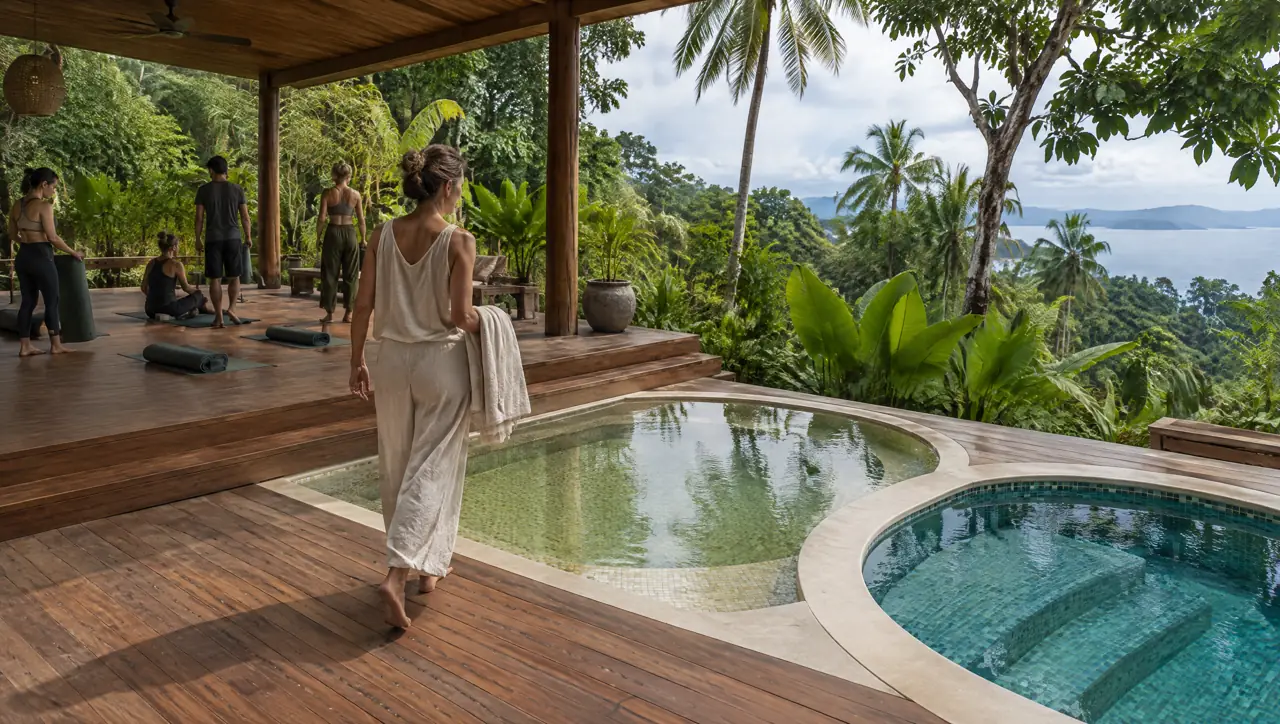
Sketch the day before you sketch the pools
- Dawn class, 06:30-08:00. The first rush. The warm pool is already at 38 °C, the cold pool already at 4 °C after its overnight run.
- Mid-morning, quiet. Guests stay with the book, the massage list or the hammock. Both pools wait; the covers go on.
- Late afternoon, 16:00-18:00. A second wave, this time with a glass cabin in the sequence if you have one.
- After dinner. A hush, soft lights, no music. The pools are for two or three people at a time.
Where you draw the circuit decides whether guests use it. Thirty metres of path and a flight of steps is a chore; ten metres of level teak is a habit. In the Koh Samui case note the duo sits a quarter of the way down the slope: downhill from the class, uphill, slowly, to the spa.
Why a duo and a small cabin beat one grand spa room
A duo is THB 700k-1.25M; a 4-seat glass cabin adds THB 380-540k. Together they come to THB 1.08-1.79M, before site works and VAT, and they can be bought in two stages. A single closed spa room costs more to build, more to cool and more to keep occupied, and in a humid climate it is usually the room guests like least at noon. Pools and a glass-walled cabin keep the garden in view, which is what the guests came for. See the duo and the glass sauna.
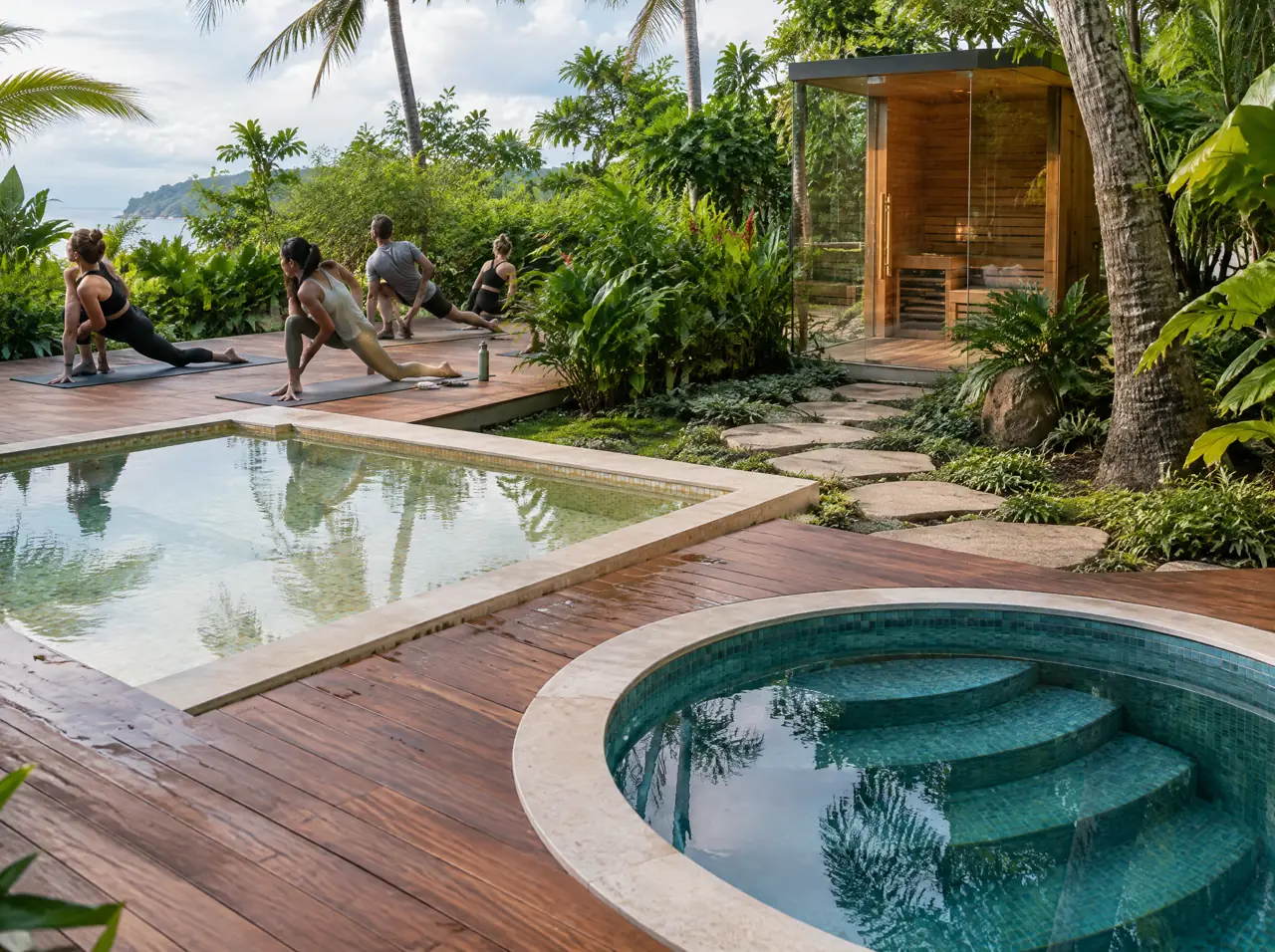
A class of twelve and a pool for four
Twelve guests do not enter the cold pool together. Three groups of four, a few minutes each, with the warm pool and the cabin absorbing the waiting, make the circuit work for a class of sixteen on a duo and one cabin. Seats on the pool edge, a hook rail, a bench and a clear walkway keep the queue relaxed. Larger retreats add a second cold pool or move to the shared-pool specification on the hospitality page.
The morning routine, in ten minutes
- Evening before: set the chiller timer so the cold pool reaches 3-5 °C by dawn.
- Morning: check both displays, take the covers off, check the water is clear and the rim clean.
- After the last session: covers on, towels collected, a note on the log sheet.
- Weekly: rinse the filters; monthly: a visit from a technician; yearly: the first-year service visit that comes with the build.
A hillside in the rainy months
Rain changes the routine, not the circuit. Covers keep downpours out of the pools, overflow drains handle what gets in, and teak boards and stone are specified with a grip rating for wet feet. Calendar matters too: on Koh Samui the wettest months are November to December, with November averaging about 445 mm, while June to September stay modest; on the Andaman coast and in Chiang Mai the rain runs roughly May to October (Thai Meteorological Department, 1991-2020 normals). The Chiang Mai page covers the north.
A one-minute briefing for guests
Guests get a short, plain notice at the pools: sessions are brief; never plunge alone; avoid alcohol beforehand; ask a doctor first if you have heart or blood-pressure conditions or are pregnant; rinse before entering. Your teacher can repeat it at the end of class. The notice is part of the handover pack, in English now and in Thai in phase two.
Guests who want the warm water but not the cold
Not everyone wants the cold, and a circuit that makes them feel behind will empty out. Give the opt-out a place: the warm pool and the cabin on one side of the ledge, a seat edge at the cold pool where a guest can sit with their feet in, and a lounger in the shade within sight of the group. Teachers set the tone by saying the cold is optional and that two quiet minutes is plenty.
Staging the spend
| Stage | What | Indicative range |
|---|---|---|
| 1 | hot + cold duo, shared plant | THB 700k-1.25M |
| 2 | 4-seat glass cabin in the spa pavilion or on the deck | THB 380-540k |
| 3 | teak deck, shade pergola, low-glare lighting | THB 35-65k, THB 85-180k, THB 16-28k |
Reserve the cabin's footprint and electrical capacity in stage one so stage two arrives without opening the deck. The retreat design note lists the layout rules we use.
Is a duo enough for a twelve-room retreat?
For most, yes: one warm and one cold pool, with a cabin as the second stage. Twelve rooms rarely mean twelve guests at once. If your classes regularly exceed sixteen, plan a second cold pool.
Who runs it day to day?
One trained person from your housekeeping or maintenance team, for about ten minutes a day, plus a monthly technician visit. We write the routine in your team's language.
Can we build in stages?
Yes, and it is the commonest way. The duo goes in first, the cabin follows when the first season has paid for it, and the plant niche and power are sized for both from day one.
What about the wet season?
Covers, overflow drains and grip-rated surfaces handle it. Schedule the shells and mosaic for the drier months of your coast, which differ between Phuket and Samui.
Other clients
A different client, a different circuit
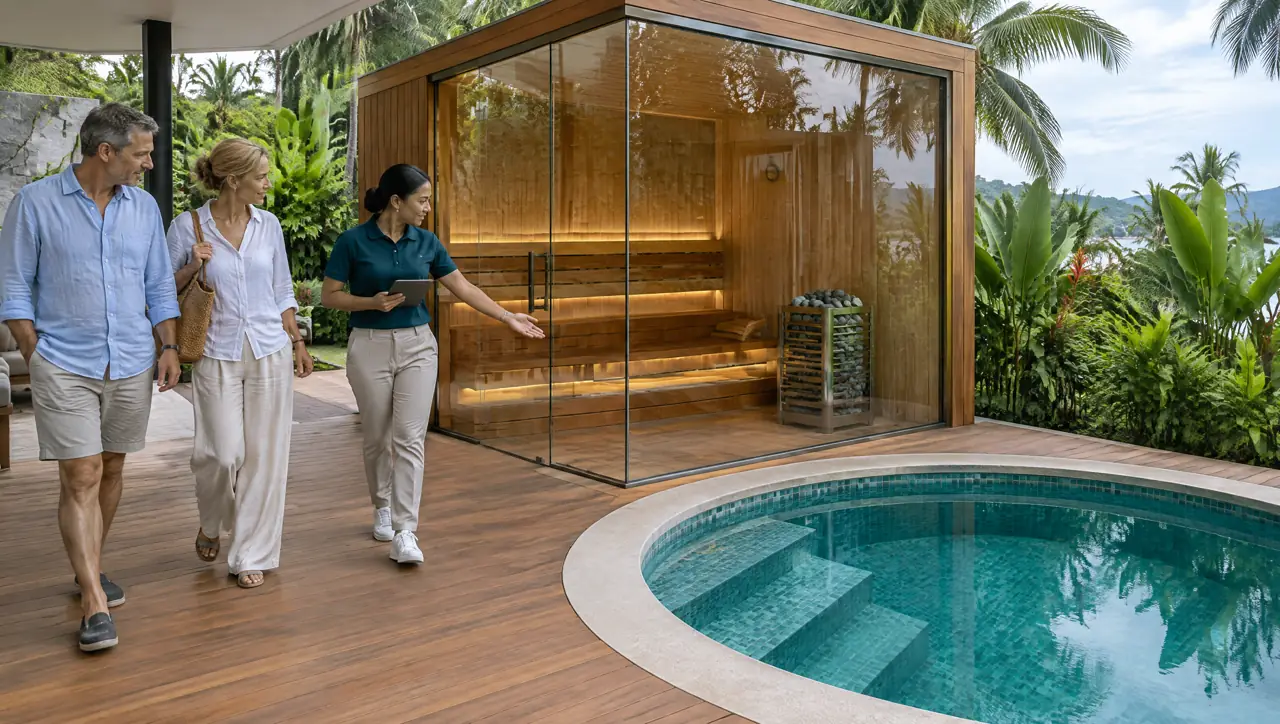
Villa developers and managers
A repeatable spa module drawn into the villa before the slab, and a routine that fits a morning shift.
Look closer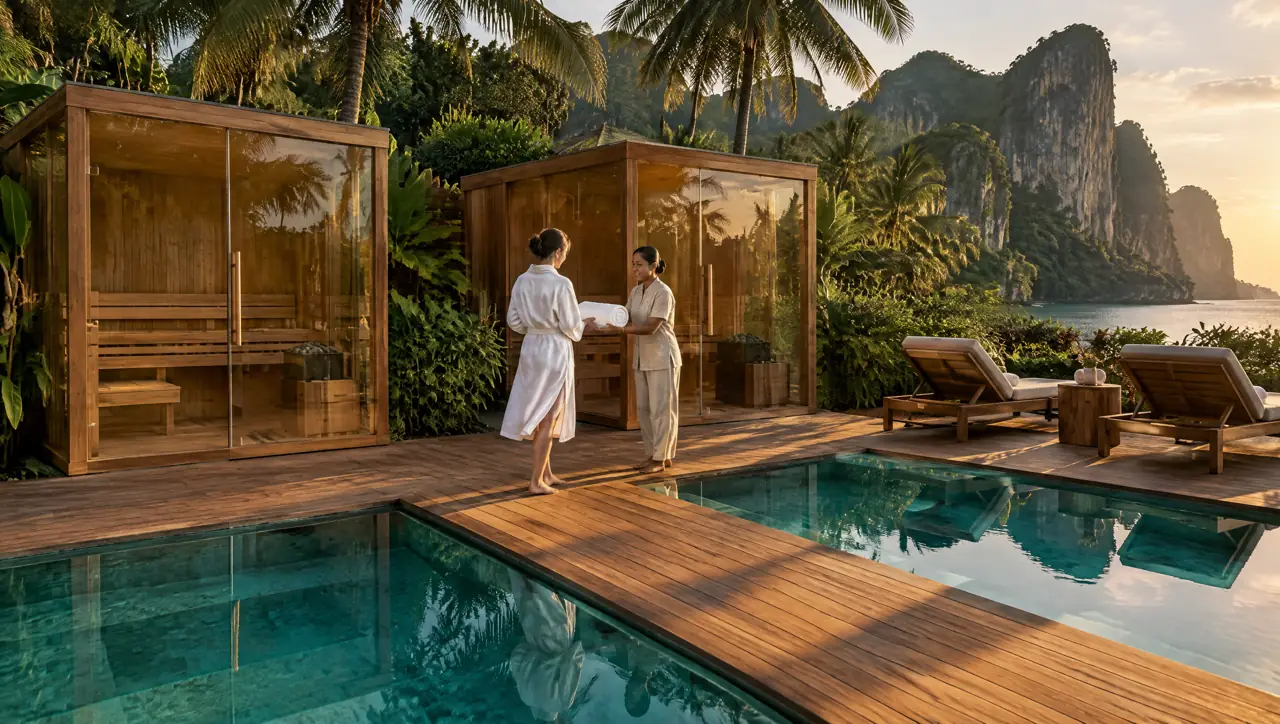
Resorts and boutique hotels
Cold pools built for sixteen-hour days, glass cabins for groups, and a spec pack for the technical team.
Look closer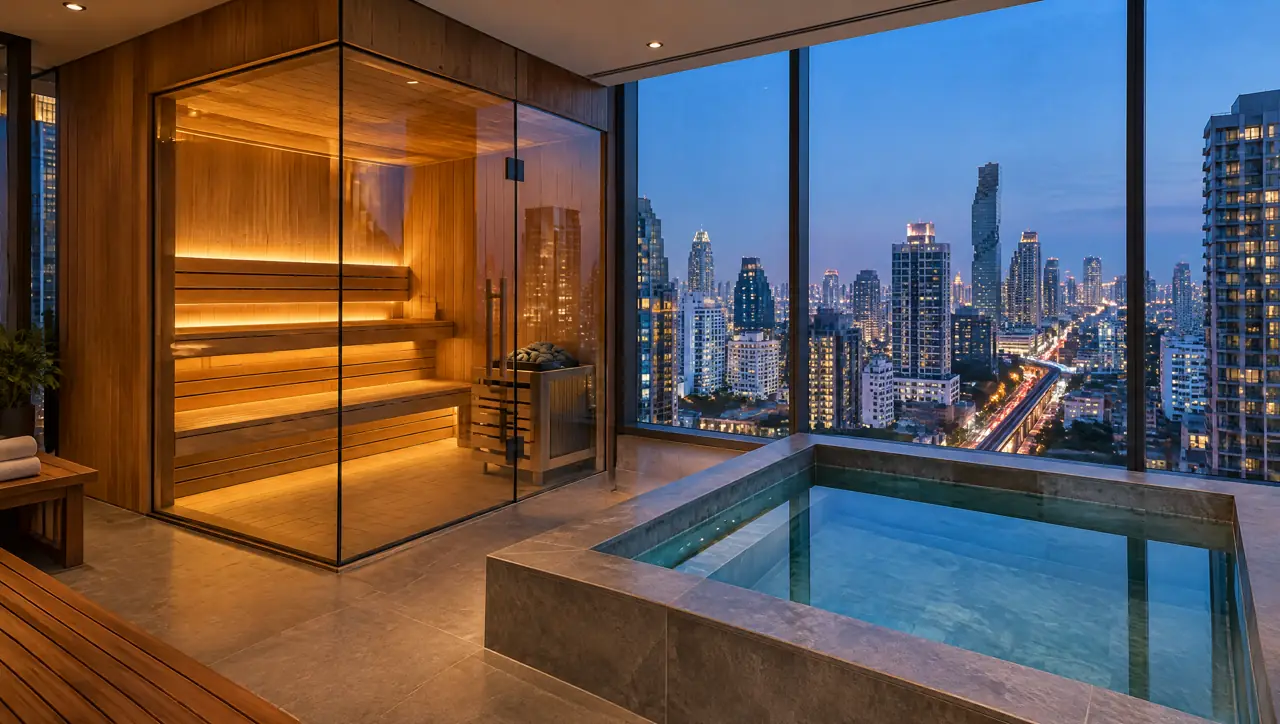
Condos and residences
A compact glass sauna and small cold pool in 10-15 m², planned around the slab, the lift and the committee.
Look closerYour property
Tell us where the class ends and the spa begins, and how many guests are in the room; we draw the walk
Start with a photograph
Send the corner of the garden, the terrace or the plant room you have in mind. We answer with questions first, then a layout and a range.
Open WhatsAppOr build the circuit yourself