Field note · retreats
Designing a hot and cold circuit between the yoga deck and the spa: distances, edges and the order of things
Most retreat circuits fail on the walk: too far, too steep, too slippery or too bright at six in the morning. These are the layout rules we draw to before a pool is placed, with the numbers that matter and the variants for different Thai climates.
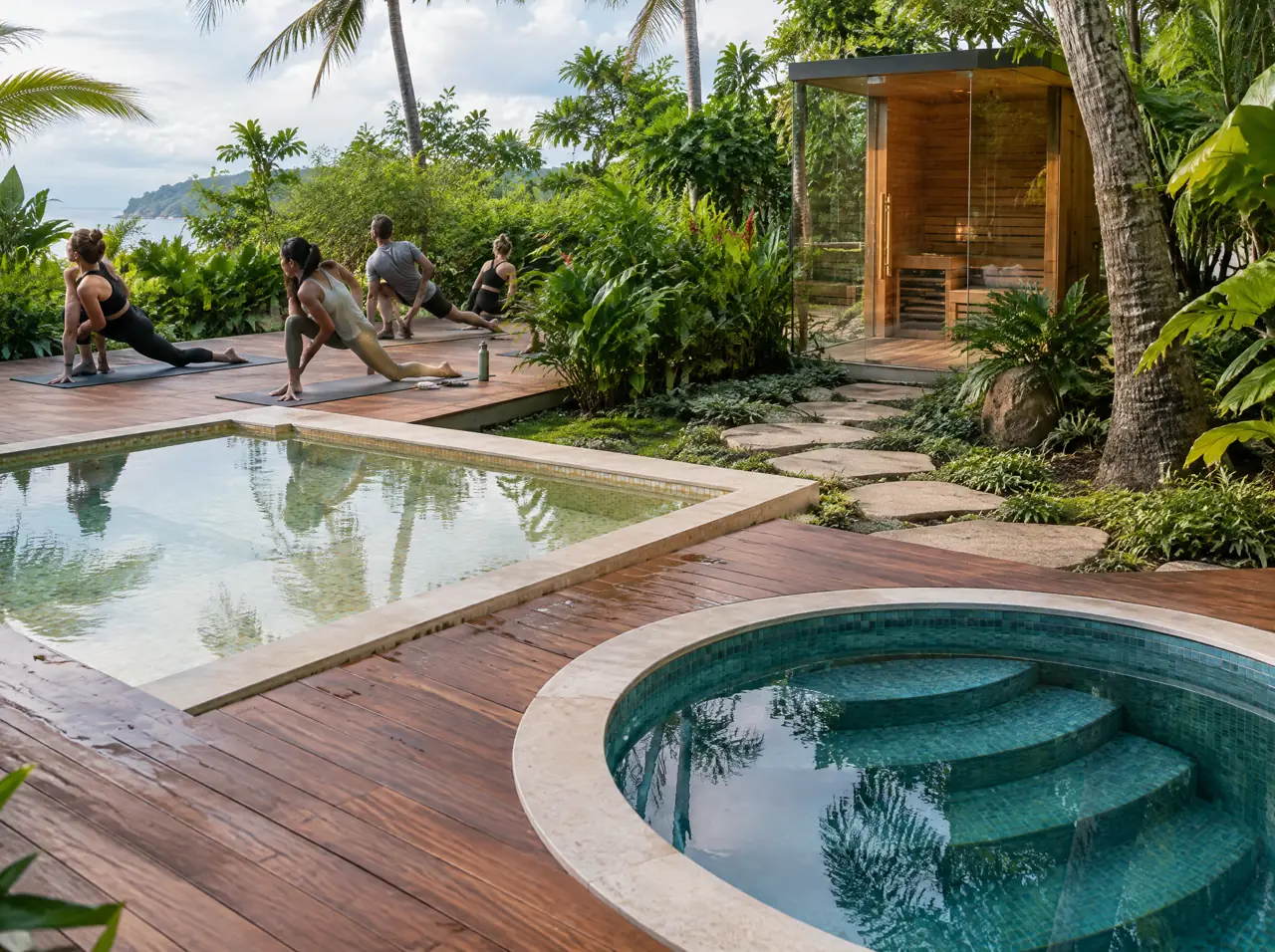
Ten metres, not thirty
Guests use what is close. Within about ten metres of level ground between the end of the class and the first pool, a circuit becomes a habit; beyond thirty, with steps, it becomes a chore. If the slope forces distance, put the circuit on the flattest part and let the spa sit uphill, so the walk after the cold is slow and warm and the walk after the class is short.
The order of stations
- Mat to rinse. A rinse shower on the path, before the pool, so sweat and oil stay out of the water.
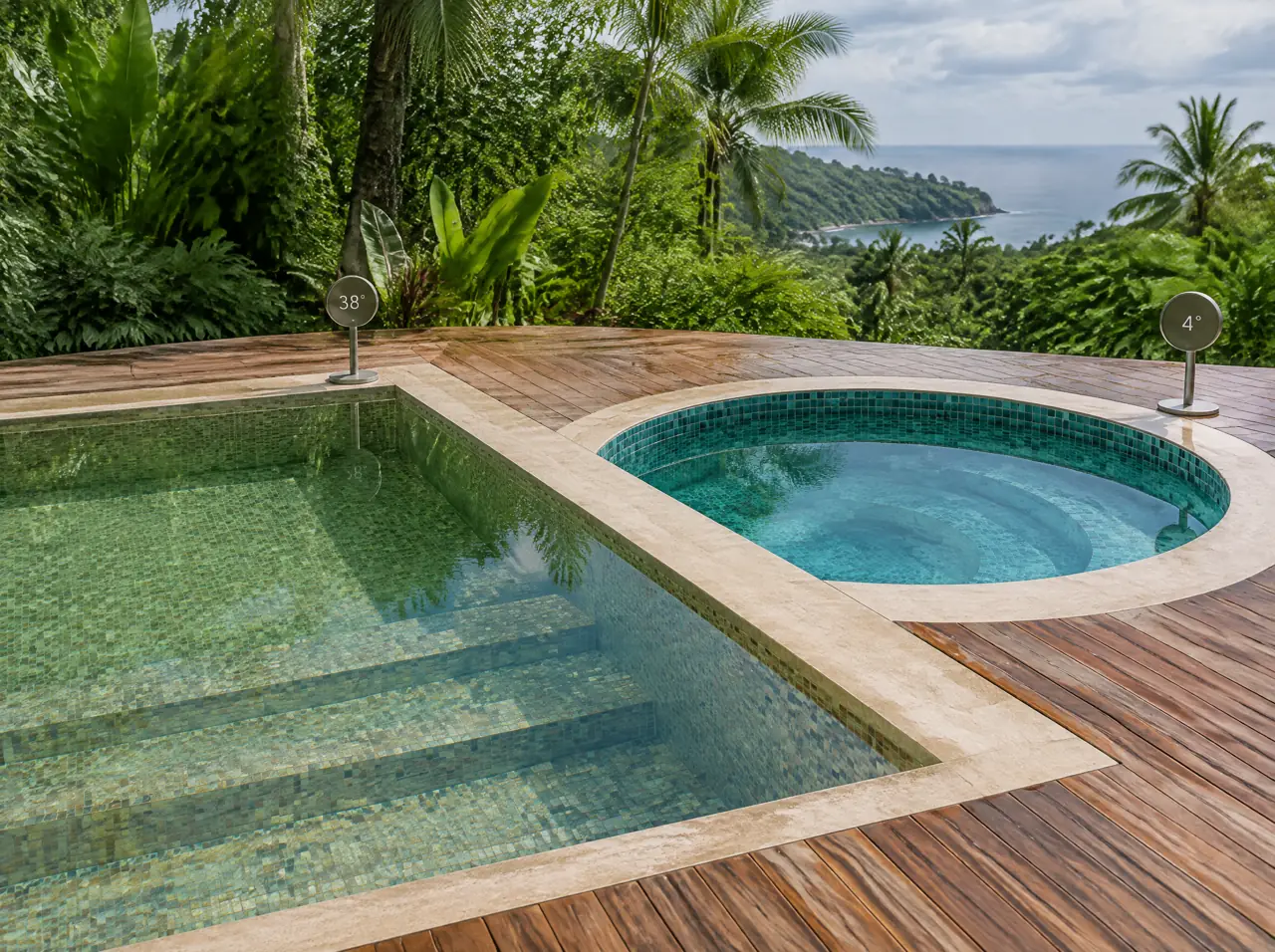
- Warm pool. Five to eight minutes at 38 °C for a loosening and a slowing down; the ledge is wide enough to sit on.
- Cold pool. One to three minutes at 3-5 °C; steps with a rail on the entry side and a hand-hold at the seat edge.
- Rest. A bench or a lounger within five steps, in shade, with towels and water within reach.
- Glass cabin, if you have one. Dry heat at the end of the sequence or in the evening, with a rinse on the way in.
This is a common sequence, not a prescription; people with heart or blood-pressure conditions, and anyone pregnant, should ask a doctor first, and your teachers can say so at the end of class.
The path: width, grip and light
- Width. About 1.2 m so two people pass with towels, 1.5 m where the class arrives together.
- Surface. Grooved teak or grip-rated stone; wet teak is slippery and wet stone is worse.
- Drainage. A fall away from the pools and a drain at each station so water does not travel down the path.
- Light. Low, warm and shielded; dawn light at head height is glare and spills toward the rooms.
Edges, hooks and somewhere dry
The detail that guests remember is the edge: a seat-height rim on the cold pool, a ledge between the pools wide enough for a glass of water, hooks at about 1.6 m for robes, a shelf for towels and a dry bench. A circuit with these feels generous; one without feels like a plumbing exercise. The duo page shows the ledge between the pools.
Where the machinery stands relative to the quiet
A retreat sells quiet, and a chiller is a compressor. The plant goes behind the spa pavilion or on the downhill side of the pools, in a louvred niche whose exhaust points at planting, never at the yoga deck or the rooms. Keep the pipe runs to the pools short and lagged; the chiller note explains the sizing.
A class of twelve, rotated
| Group | Warm pool | Cold pool | Rest |
|---|---|---|---|
| A (four guests) | 0-8 min | 8-10 min | 10-20 min |
| B (four guests) | rest | 0-2 min after A | enters warm at 10 min |
| C (four guests) | rest | waits on the ledge | enters warm at 20 min |
Three groups of four, staggered by about ten minutes, let twelve people use one warm pool, one cold pool and a cabin without queues. For classes of sixteen, add a second cold pool or the shared-pool specification on the hospitality page.
Variants by climate
- Koh Samui and the Gulf side. Humidity near 81 percent and rain that peaks in November; covers on the pools and grip-rated surfaces; see Samui.
- Phuket and Krabi. Heaviest rain from May to October with a September peak; schedule wet works around it; see Phuket.
- Chiang Mai. Cool mornings from November to February: put the warm pool and the cabin first in the sequence; see Chiang Mai.
Signage, briefing and phasing
A short notice at the pools, a one-minute briefing at the end of class and a posted routine for staff complete the circuit. Build the duo first (THB 700k-1.25M), reserve the cabin's footprint and power, and add the cabin (THB 380-540k for four seats) when the first season has paid for it. The retreats page covers the spend by stage.
A sample plan, with distances
- Yoga deck, 8 x 10 m, roofed, with a rinse shower at its downhill edge.
- Stepping-stone path of about 8 m to the warm pool, 1.2 m wide, drained at the lower end.
- Warm pool and cold pool side by side on one teak platform, 3.4 x 1.6 m with a 0.4 m insulated ledge.
- Bench, hooks and towel shelf along the uphill edge, shaded by the spa pavilion's roof.
- Plant niche behind the pavilion, 12 m from the pools, exhaust toward planting.
- Glass cabin in the pavilion or on the platform's far end, 4 to 6 seats, with the door facing the pools.
Silence as a design material
Retreats sell quiet, so the circuit adds none: pumps on vibration pads, the chiller beyond the pavilion, no speakers at the pools, and doors and gates that close softly. The sound of water from an overflow edge is the only music; if it runs at night, it runs behind a wall that keeps it from the guest rooms.
Five ways a circuit ends up unused
- The walk is long, steep or slippery, so guests decide in the doorway that it is not worth it.
- There is no rinse before the pool, so sweat and oil go into the water and the staff drain and refill more often.
- Nowhere to sit dry, which turns a two-minute plunge into a cold wait.
- The pools sit in the afternoon sun, so the chiller fights all afternoon and the cover stays on when guests want it off.
- The plant is audible from the deck, and silence was the thing the retreat was selling.
How far should the cold pool be from the yoga deck?
Within about ten metres of level ground. If the site is steep, put the pools on the flattest part and the spa uphill.
Do we need a shower between the warm and the cold pool?
A rinse before the first pool is the one that matters; between the pools a quick rinse is a nicety, and a drained ledge is enough for most retreats.
What lighting works at dawn?
Low, warm and shielded: path lights near the ground and soft underwater LEDs. Avoid lights at head height or aimed at the rooms.
Can we use the circuit in the rainy season?
Yes, with covers, overflow drains and grip-rated surfaces. Schedule construction in the drier months of your coast.
More field notes
Next in the field notes
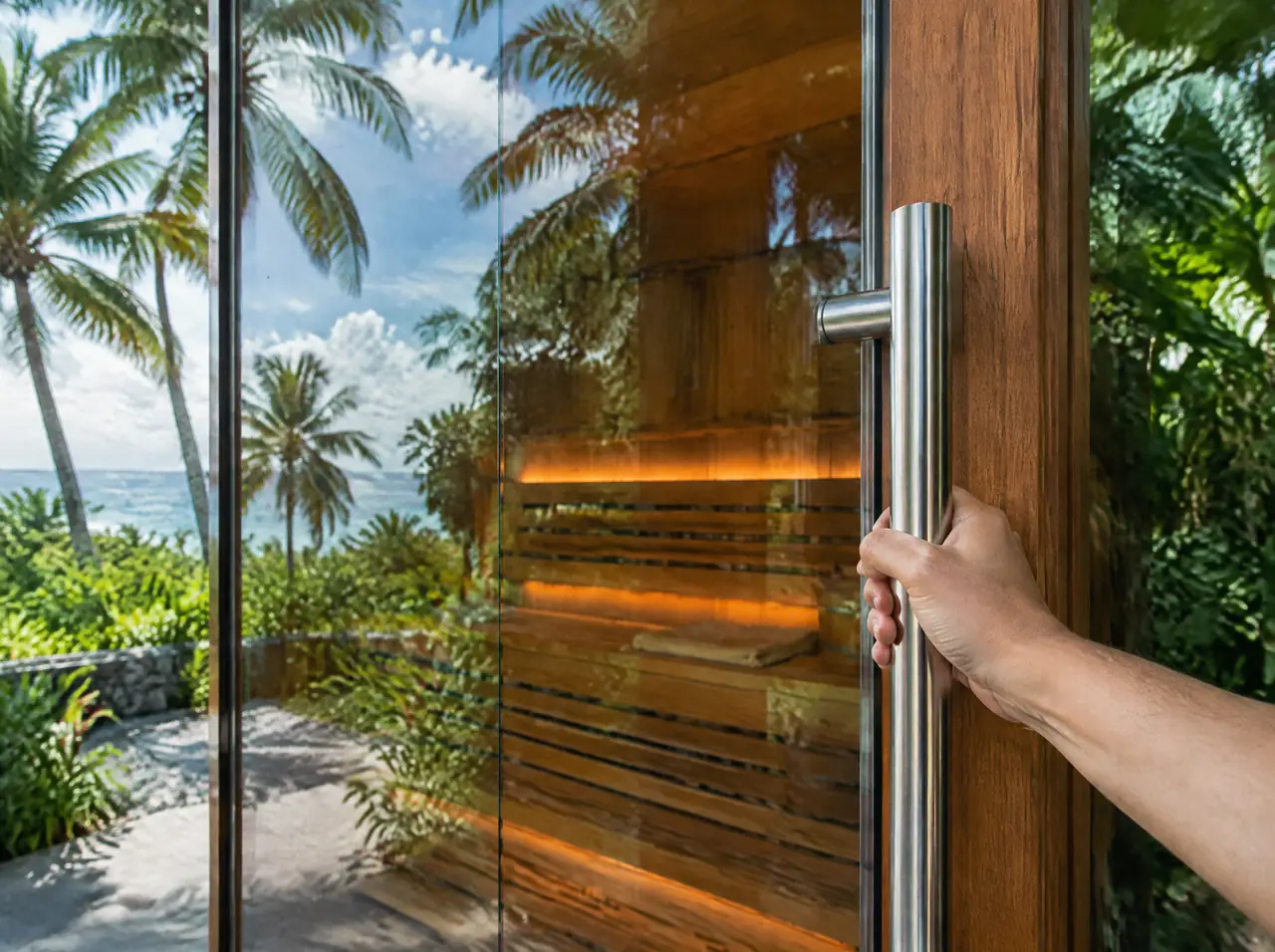
Glass saunas in the tropics
Where the sun is, what double glazing and coatings do, and which wall gets the glass: the choices that matter in Thai heat.
Look closer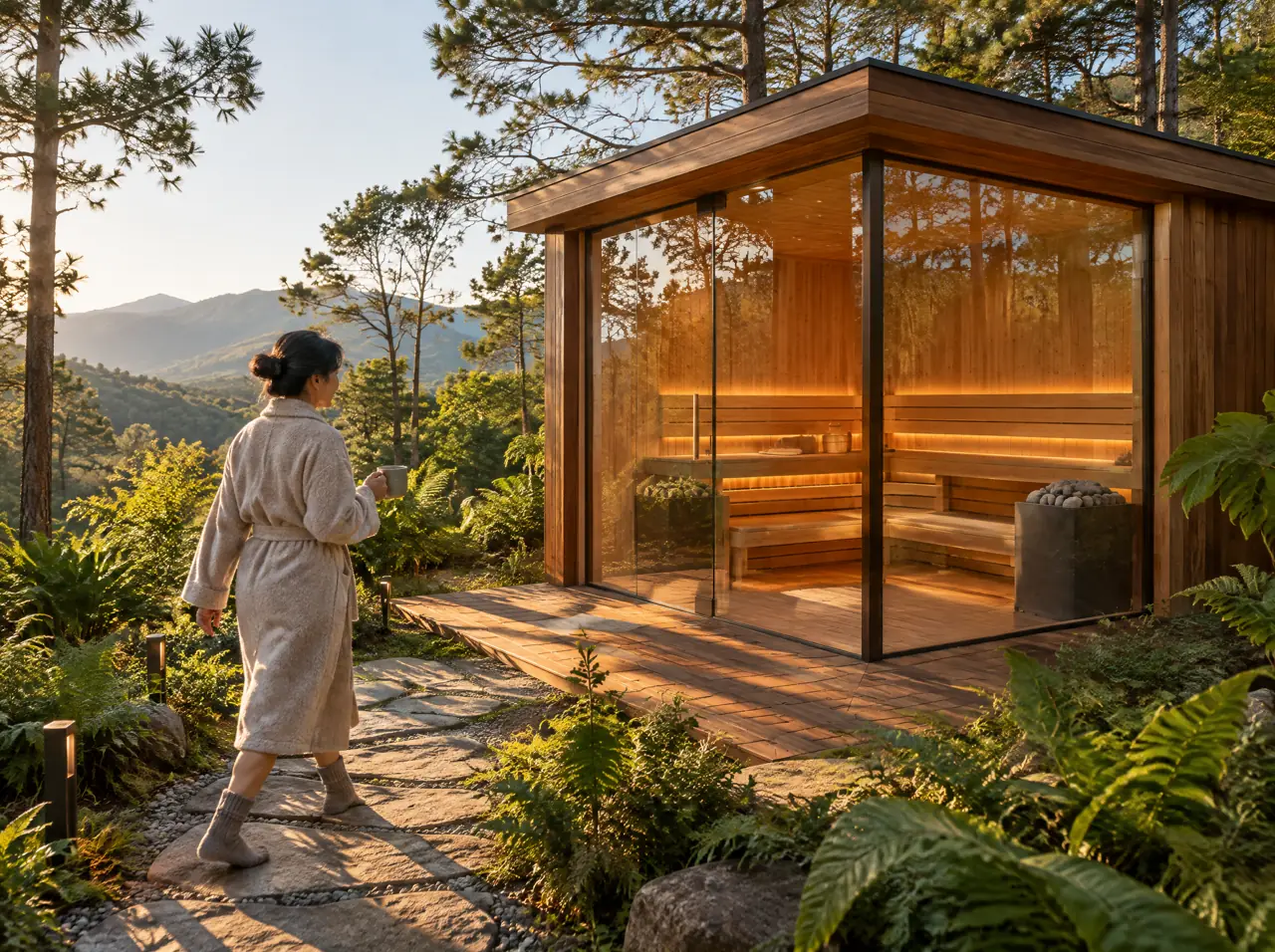
Chiang Mai cool-season sauna
How cool mornings raise a cabin's heat loss, what allowance the heater gets and how the same circuit works in April.
Look closer
Ice bath chiller sizing and cost to run
Litres, horsepower, pull-down, noise and a worked cost-to-run example, plus five questions for any supplier.
Look closerFrom note to layout
Send the site plan and the class size; we draw the circuit from mat to cabin
Start with a photograph
Send the corner of the garden, the terrace or the plant room you have in mind. We answer with questions first, then a layout and a range.
Open WhatsAppOr build the circuit yourself