Koh Samui · Gulf of Thailand
Cold plunge and sauna on Koh Samui: an island, a ferry leg and a rain calendar of its own
Samui's rain does not follow Phuket's. The wettest months arrive late in the year, the middle of the year is gentle, and everything we build has to cross water on its way. That makes the island a good place to build in June and a poor one in November, and it shapes how we schedule a retreat, a jungle villa or a boutique hotel.
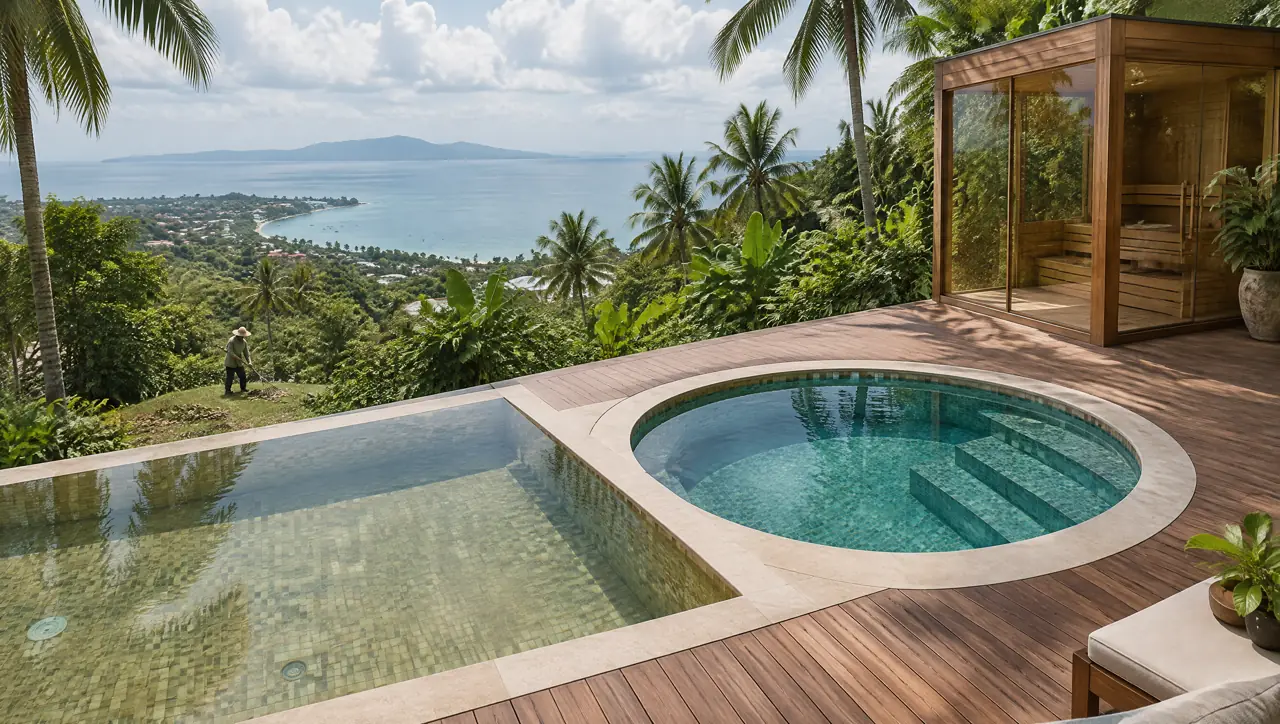
The rain peaks late: a calendar for building
| Months | What the weather does | Best used for |
|---|---|---|
| January to April | dry; February averages 64.3 mm, April 82.9 mm | shells, waterproofing, mosaic; the high season is also here, so access and labour are busy |
| May | hottest month at a mean afternoon high of 32.9 °C | commissioning chillers while the air is at its worst |
| June to September | modest rain, about 100-135 mm a month | the quiet window: installation and handovers |
| October to December | north-east monsoon; November averages 444.6 mm, October 294.9 mm, December 263.1 mm | indoor work, joinery and preparation; avoid wet works |
Source: Thai Meteorological Department 1991-2020 normals, Ko Samui station (annual rain about 1,994 mm, mean humidity about 81 percent). On the Gulf side rainfall peaks with the north-east monsoon, between mid-October and mid-February, while the Andaman coast peaks in September. The Thailand overview compares the two.
What gets built on Samui
- Wellness retreats and yoga studios around Bophut, Maenam and Taling Ngam: a duo between the yoga deck and the spa, a small cabin in a second phase. See retreats and the Samui case note.
- Jungle villas above Choeng Mon, Bophut and Lamai with sea views: corner glass cabins and round plunge pools, built on slopes.
- Boutique hotels near Chaweng and Lamai: shared cold pools and a cabin for guests who want ritual, not a spa menu.
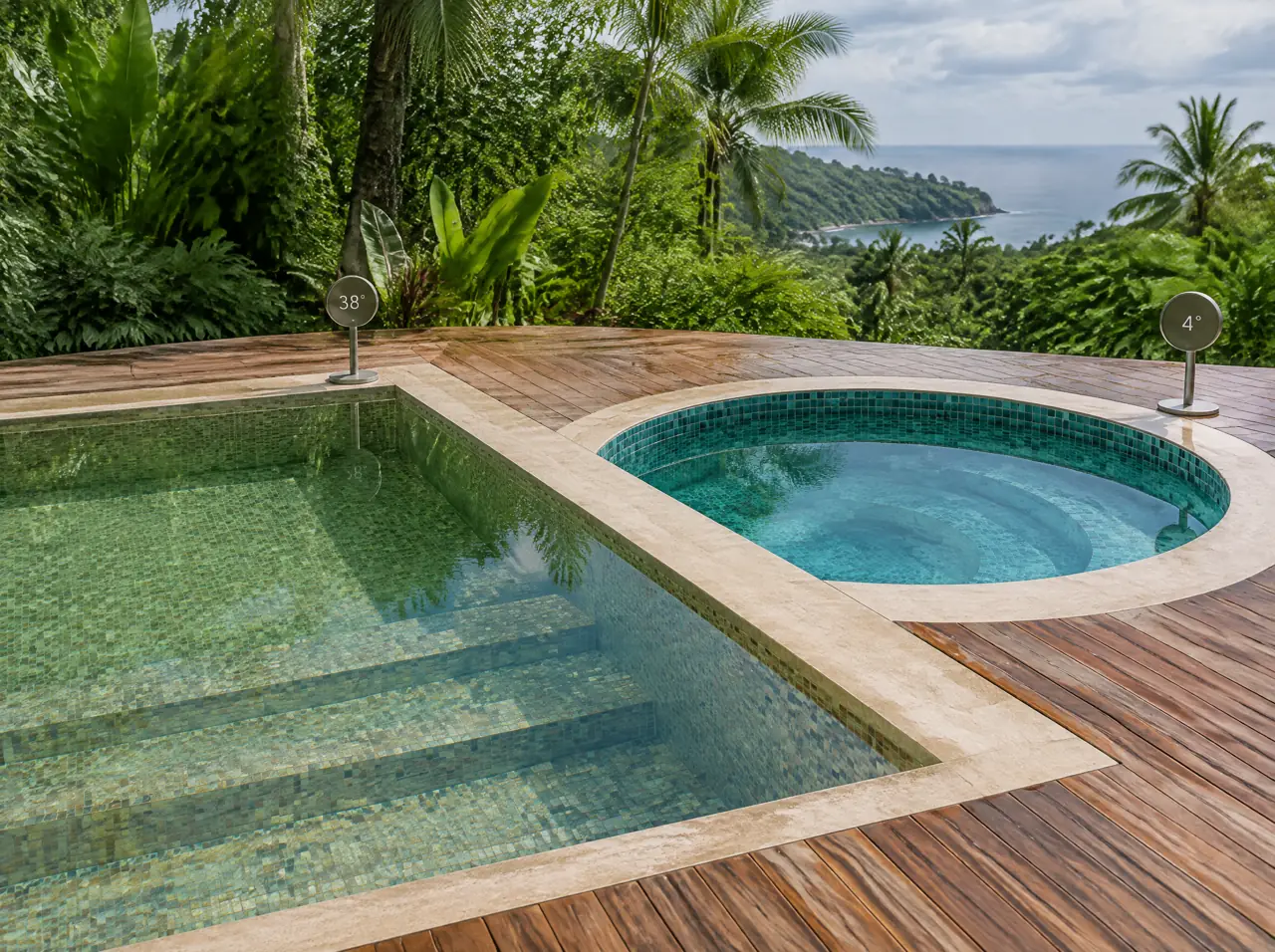
An island, a jetty and a lift to the plot
Everything crosses water: crated cabin panels, glass, the chiller and the mosaic sheets. We plan the leg in the layout: crate sizes against ferry and truck limits, the time the plot's access road can take a delivery, and what lifting is available at the end. Panels are numbered and packed so that the first crate opened holds the first thing installers need. Deliveries are timed to arrive before the wet months, not into them.
Jungle humidity and the materials list
With mean humidity near 81 percent, timber and fixings are chosen for a house that is damp most of the year: teak or thermally modified timber outside, stainless steel fixings, a ventilated gap behind cladding and a base clear of the ground. Termites and creeping roots are common on jungle plots, so cabins stand on raised plinths and shells get a waterproofing detail that roots cannot work through.
Power and water on an island plot
Ask the utility about the quality of supply to your plot, the likelihood of interruptions and whether a three-phase connection is available for a heater of 8 kW or more. We add surge protection and a restart routine for the chiller. Ask also for a water analysis: hard or mineral-heavy water changes how we filter and when the plunge pool is refilled. Sauna power in Thailand lists the checks.
Island permits and licences: what to ask
- Which local officer handles building permits for my plot (the municipality or the tambon administrative organisation), and does a small free-standing cabin or a plunge pool need a permit or a notification?
- If guests pay to stay, which licence regime covers the property, and does a sauna or plunge pool change its category?
- Are there rules about works on slopes, retaining walls or tree removal that apply before a plant niche is dug?
The Building Control Act B.E. 2522 generally requires a permit from the local officer to construct, modify or move a building, and lets some alterations proceed by notification (Tilleke & Gibbins, 2025). Whether a cabin or a pool counts, and which route applies, is for your office; we bring drawings, loads and materials to that conversation.
What a retreat or a jungle villa costs on the island
A retreat duo with a 4-seat glass cabin in a second phase is THB 1.08-1.79M; a jungle villa circuit with a cabin, a round pool and a deck is THB 700k-1.1M. Freight to the island and the final sea leg are itemised in the quote. See budget ranges and the duo page.
Do you ship to Koh Samui, and how?
Yes. Kits travel crated by sea and road, and the last leg is planned around the jetty, the road to the plot and any lifting at the end. The route and the crate sizes go into the layout before production starts.
When is the best time to build here?
The quiet middle of the year, June to September, when rain is modest and the island is not at its busiest. January to April is dry but busy; October to December brings the heaviest rain.
How much is an ice bath or plunge pool on Samui?
A built-in plunge pool is THB 330-590k to 370-660k with refrigeration; a hot + cold duo is THB 700k-1.25M; a tub set starts at THB 190-270k. Freight and site works are itemised.
Do you work with retreats that have small teams?
Yes. The routine is designed for one trained person for ten minutes a day, and the handover pack is written for your team's language.
Other places
More islands and cities
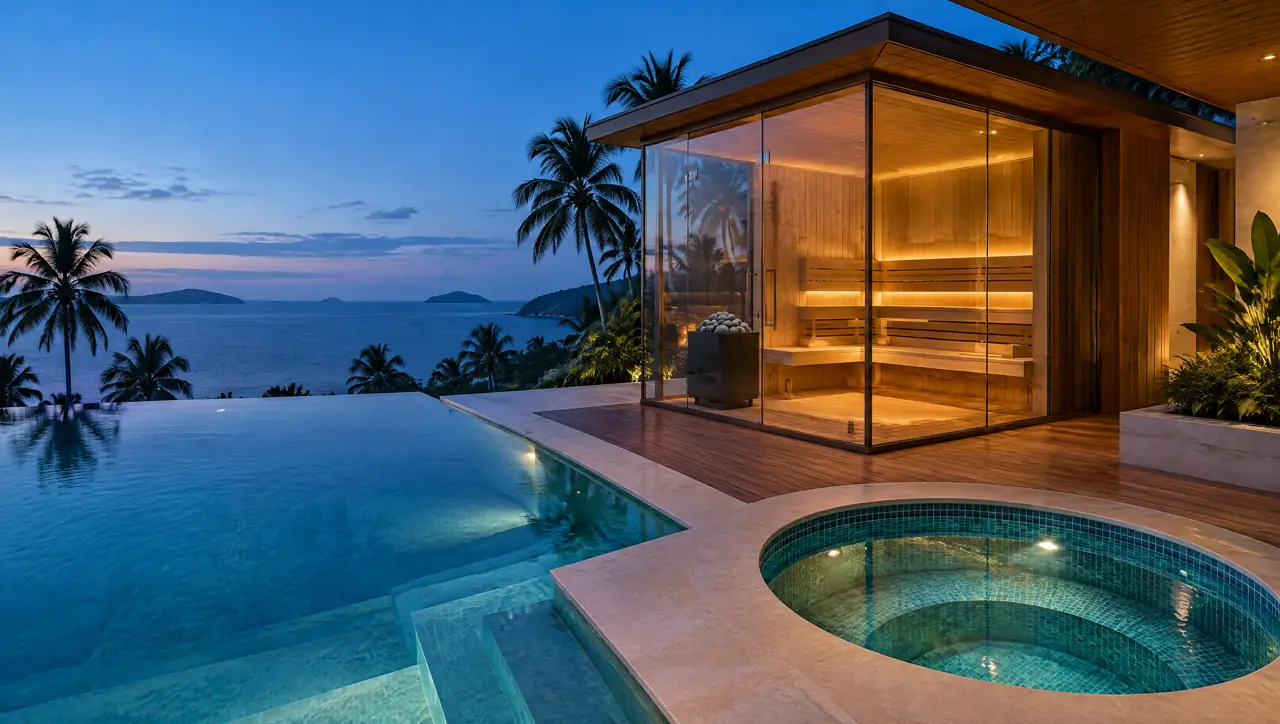
Phuket
Hillside villas, beach resorts and clubs: access up narrow roads, a monsoon calendar and a plunge pool built for 34 °C afternoons.
Look closer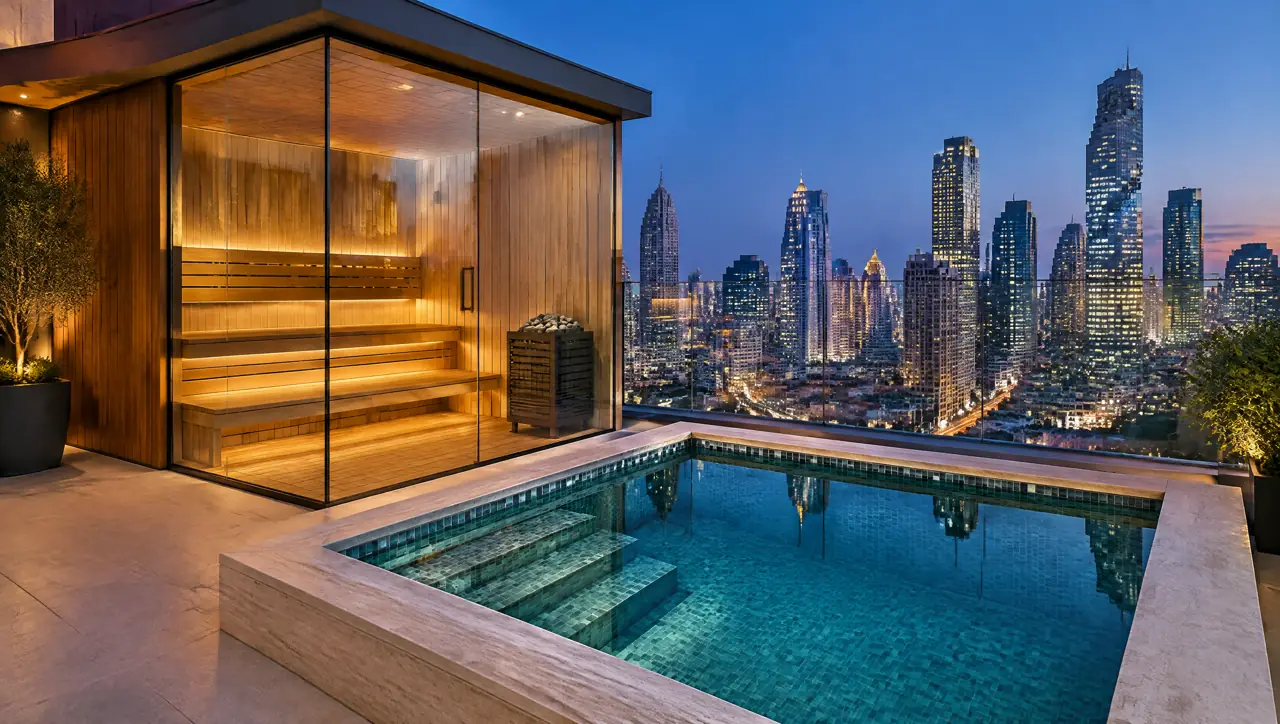
Bangkok
Condos, clinics and clubs: one service lift, a committee to convince and a plant that must reject heat into a city.
Look closer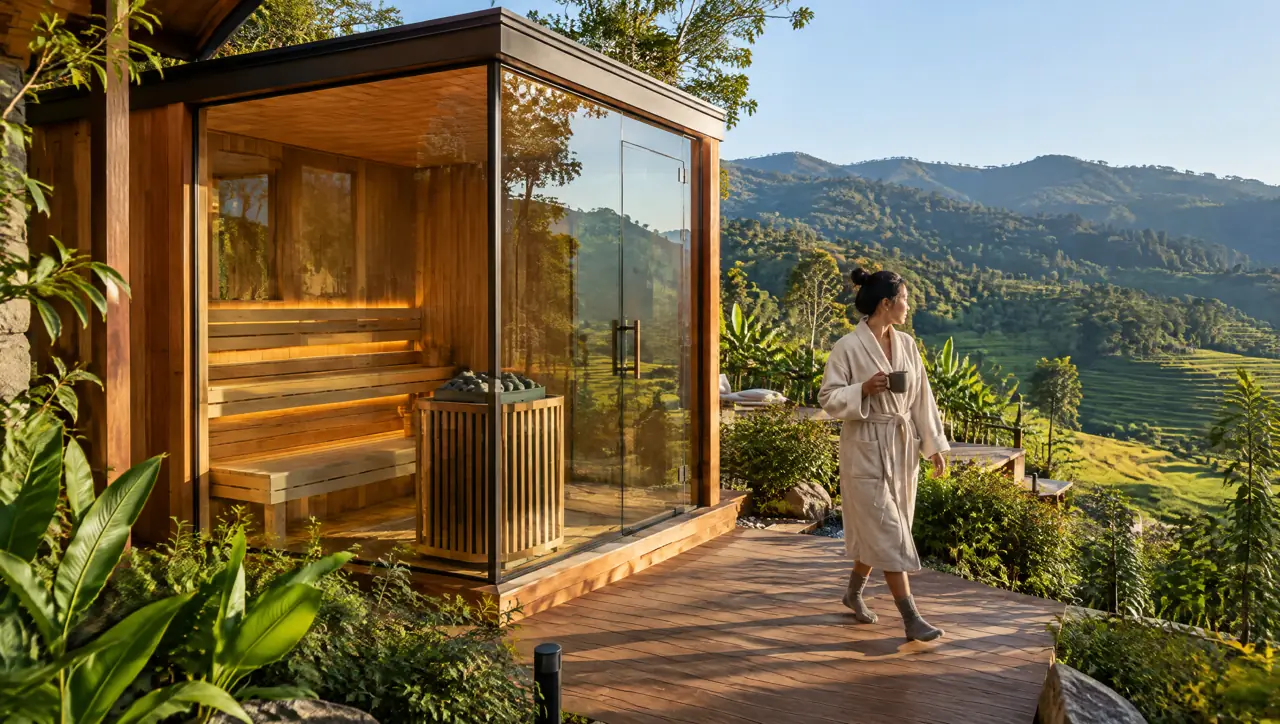
Chiang Mai
A real cool season for the cabin and a 36.7 °C April for the pool: hillside lodges, villas and retreats in the north.
Look closerYour property
Send the plot, the road in and the nearest jetty; we plan the crossing and draw the circuit
Start with a photograph
Send the corner of the garden, the terrace or the plant room you have in mind. We answer with questions first, then a layout and a range.
Open WhatsAppOr build the circuit yourself