Field note · Chiang Mai
A cool season changes the heater: sizing an outdoor sauna for Chiang Mai mornings
In Chiang Mai the heater is sized for January and the chiller for April. January nights average 15.7 °C and record lows come near 4 °C; April afternoons average 36.7 °C. This note shows how much more heat an outdoor cabin loses on a cool morning and what we do about it.
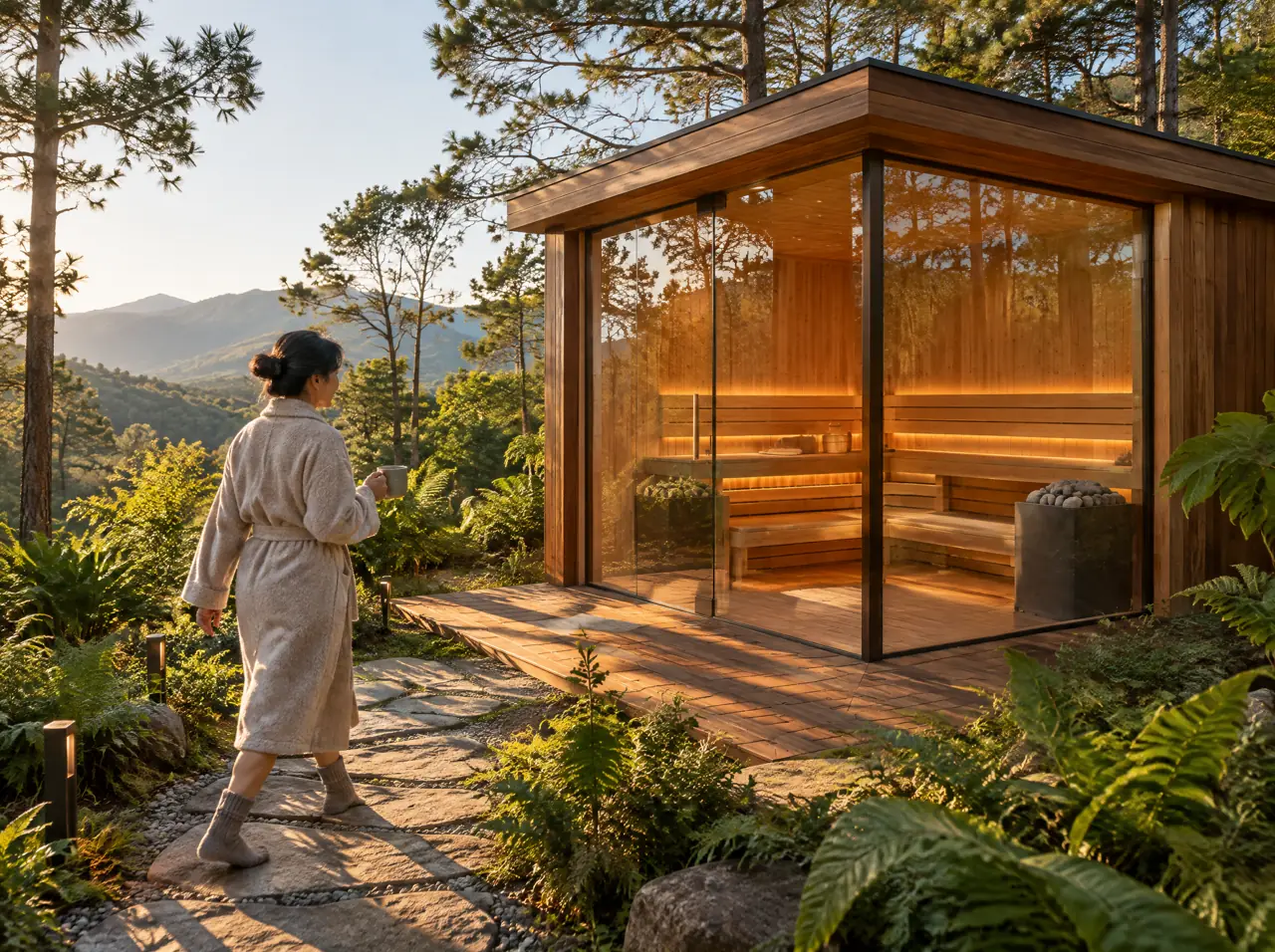
What the north's weather really is
Chiang Mai sits at 305 m. At its station the coolest month is January, with a mean daily minimum of 15.7 °C; the hottest is April, with a mean daily maximum of 36.7 °C; annual rainfall is about 1,139 mm, nearly all from May to October (Thai Meteorological Department, 1991-2020 normals). Record lows near 3.7 °C and highs near 42.5 °C come from TMD extremes compiled by Wikipedia. A cabin on a hillside lodge sees most of that range in one year.
Heat loss, to a first approximation
A cabin loses heat roughly in proportion to the difference between the inside and the outside. Taking a 90 °C cabin and comparing every outside temperature with a 30 °C day, as a first approximation:
| Outside | Difference to 90 °C | Heat loss relative to a 30 °C day |
|---|---|---|
| 30 °C | 60 K | 1.00 |
| 25 °C | 65 K | 1.08 |
| 20 °C | 70 K | 1.17 |
| 16 °C | 74 K | 1.23 |
| 10 °C | 80 K | 1.33 |
| 5 °C | 85 K | 1.42 |
At 16 °C, a typical January morning, the cabin loses about a quarter more heat than on a warm day; at 5 °C, about two fifths more. Wind and an open site add to it. Real losses depend on insulation and glass, so treat the table as a guide to the direction and the rough size of the allowance, not a calculation for your cabin.
What we change for the north
- A cold-weather heater allowance on top of the one-kilowatt-per-cubic-metre rule and the glass allowance; for outdoor cabins in Chiang Mai about a quarter more.
- Double glazing on the windy side and a door seal that closes properly.
- A sheltered siting. The cabin's back to the prevailing cold wind, the door on the lee side, a deck that drains.
- A vestibule or a screen so that opening the door does not dump the heat in a cold gust.
Warm-up, in plain words
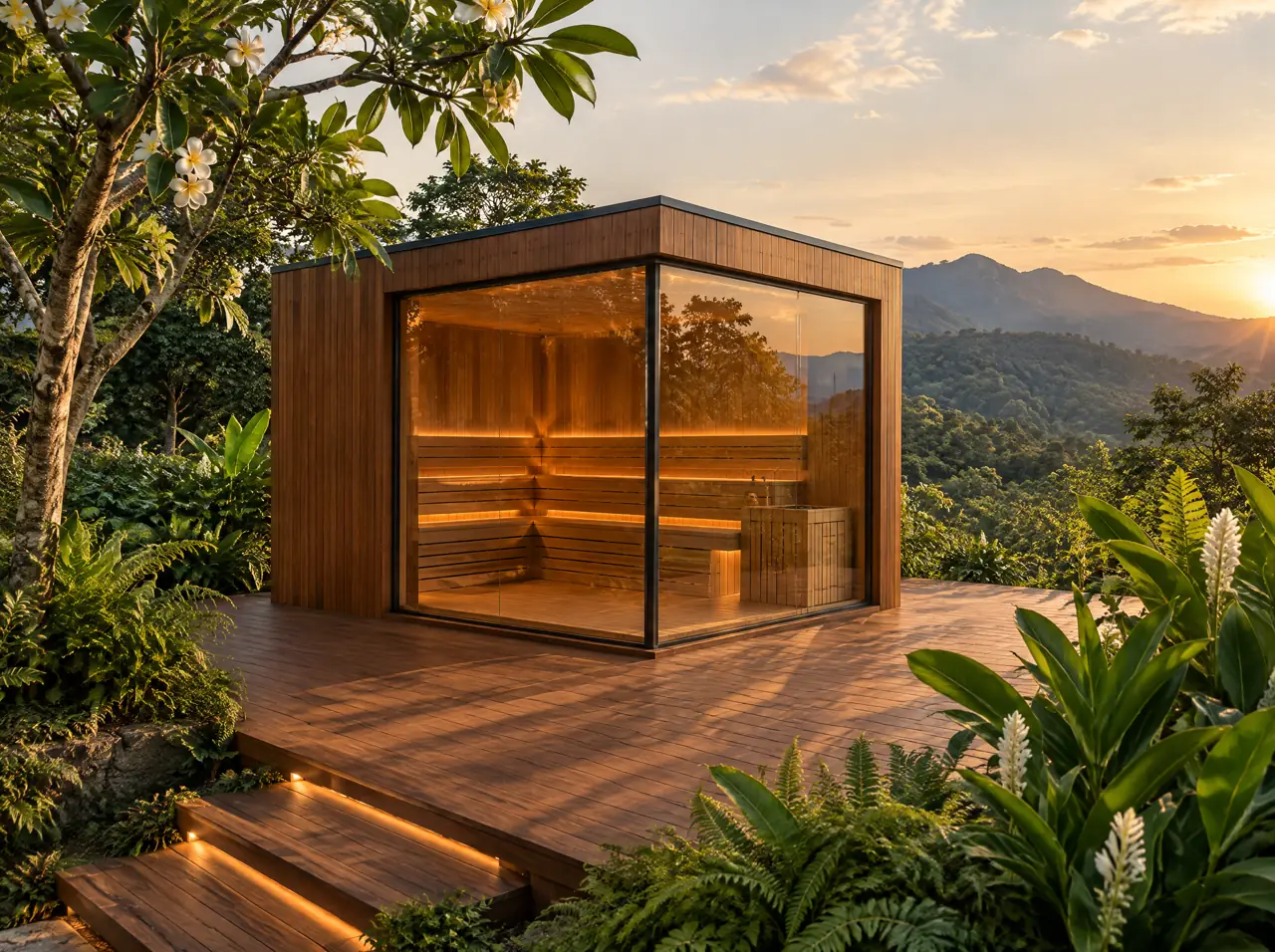
Our standard is about forty minutes to working temperature. A correctly sized heater keeps close to that on a cool morning; an undersized one stretches it, and the cabin then never feels properly hot. If you want to use the cabin at six in the morning, a timer starts the heater before you walk down. See the deck and garden sauna page for the build.
And in April: the same circuit, the other way round
When the pool is the main event, the chiller is the equipment under strain: a 36.7 °C afternoon average, strong sun and low humidity. Shade the pool, insulate the shell and place the unit in a ventilated niche. The annual mean dew point at the Chiang Mai station is about 19.8 °C, against 23-24 °C at the coastal stations, so cold pipes sweat less than they do on the coast. The Chiang Mai page has the local calendar and chillers for Thai heat the sizing.
A cool-season and a hot-season routine
| Season | Cabin | Cold pool |
|---|---|---|
| November to February | morning and evening use; timer on from 40 minutes before | chiller idles; the water starts cooler |
| March to May | short, early sessions | afternoon use; chiller at its hardest; cover on in the day |
| May to October | after rain, with covers on the deck | covers and overflow drain for storms |
A worked example: a 4-seat outdoor cabin
On the coast a 4-seat cabin of 2.0 x 1.7 m inside takes an 8 kW heater. In Chiang Mai, with a cold-weather allowance of about a quarter, it steps up to the next size, a 10.5 kW heater (the size we use for a 6-seat cabin). That is three-phase supply either way, but the breaker and cable are sized for the larger unit from the start. The cost is a heater and a cable, not a different cabin; ask for it in the layout.
Wind, the door and the shelter
- Turn the back to the wind. On a hillside the cold air runs downhill at dawn; a cabin with its blind wall uphill loses less heat.
- Put the door on the lee side, with a screen so opening it does not dump the cabin's heat.
- Plan the walk. A lit, dry path of ten metres or less from the house to the cabin is the difference between a ritual and an intention.
- Deck, not lawn. A teak deck with drained edges keeps wet feet off cold ground.
Getting the pieces up the hill
Many hillside lodges sit at the end of a narrow, steep road, and the last stretch decides how the cabin and the pool shell arrive. We ask for the narrowest gate, the tightest bend and the steepest gradient on the route, then size the sections to pass them; where a delivery truck cannot reach, the final leg is a smaller vehicle or a carry. A short video of the approach from the main road tells us more than a plan does.
How much bigger is the heater for Chiang Mai?
About a quarter more than the same cabin on the coast, as a cold-weather allowance for an outdoor cabin, plus the glass allowance that applies everywhere. We confirm it in the layout for your site.
Does the cold plunge need a chiller in January?
It runs far less, since the water starts cooler and the air takes less heat in. But the pool still has to hold 3-5 °C when April comes, so the unit is sized for April.
What does an outdoor sauna cost in Chiang Mai?
A 4-seat glass cabin is THB 380-540k, a 6-seat THB 540-770k, with the deck extra (THB 35-65k). Freight and site works are itemised.
Is the cabin worth heating on an April morning?
Many guests use it early, at about six, when the air is still mild, then plunge. A shorter session works; a timer starts the heater before you walk down.
Does the cabin's glass cope with a 4 °C morning?
Tempered glass is about five times more resistant to thermal shock than ordinary glass (AGC), and double glazing reduces the shock and the heat loss. Cabin glass is specified for that range.
More field notes
Next in the field notes
Glass saunas in the tropics
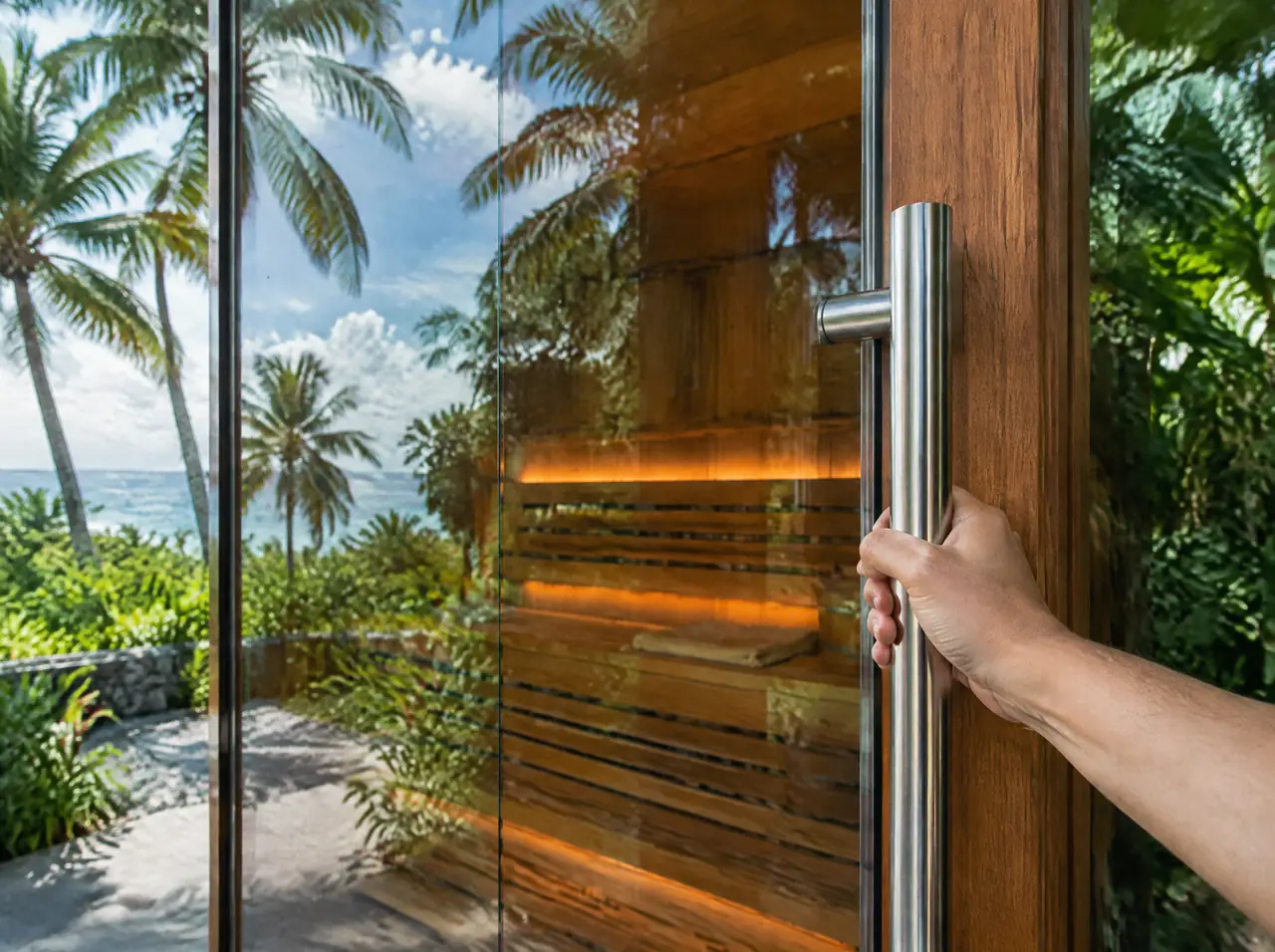
Where the sun is, what double glazing and coatings do, and which wall gets the glass: the choices that matter in Thai heat.
Look closer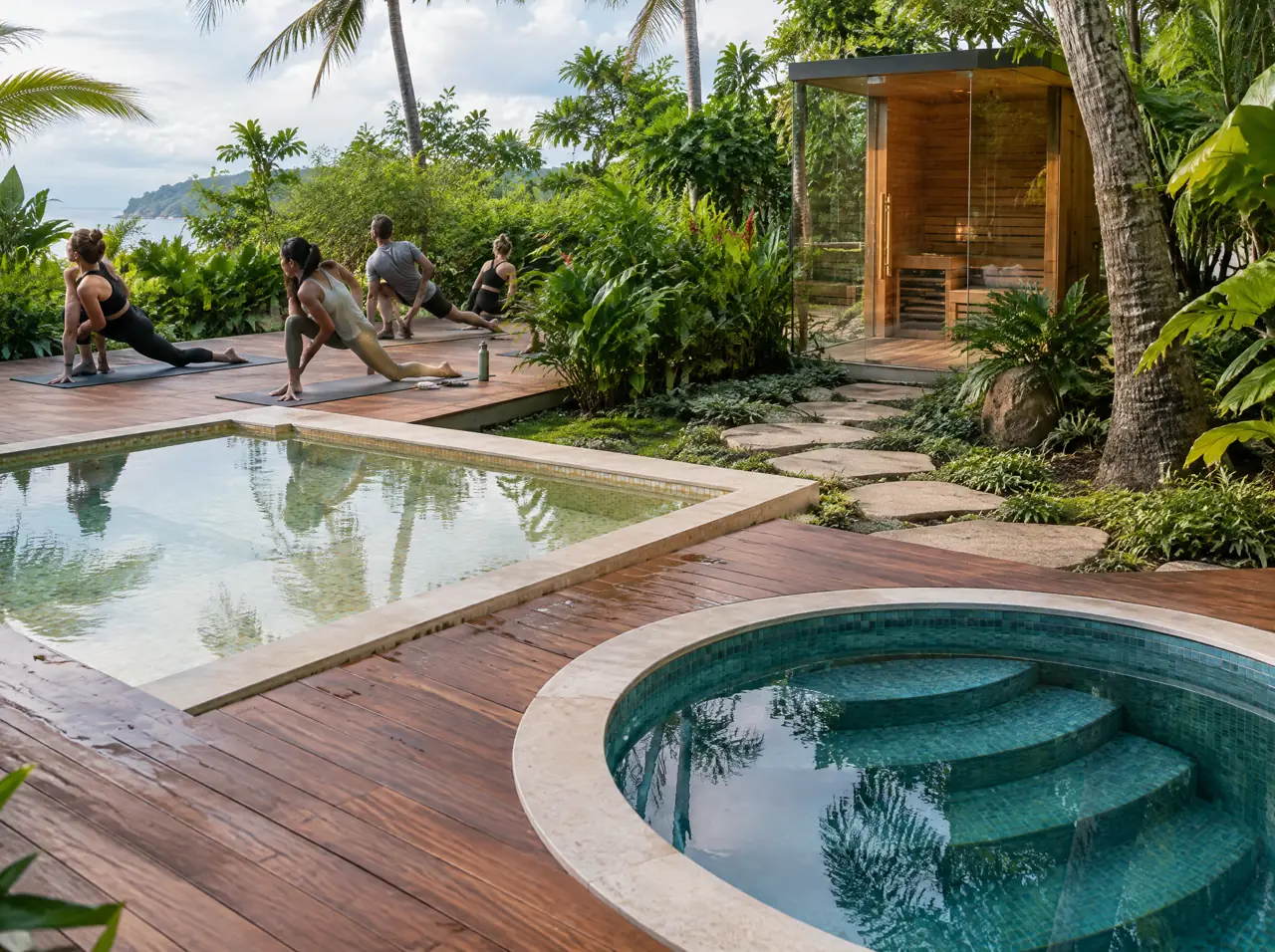
Retreat circuit design
Distances, path, edges, the order of stations and a rotation for a class of twelve: the layout rules for a retreat circuit.
Look closer
Ice bath chiller sizing and cost to run
Litres, horsepower, pull-down, noise and a worked cost-to-run example, plus five questions for any supplier.
Look closerFrom note to layout
Send the plot and the exposure; we size the heater for January and the chiller for April
Start with a photograph
Send the corner of the garden, the terrace or the plant room you have in mind. We answer with questions first, then a layout and a range.
Open WhatsAppOr build the circuit yourself