Build no. 8 · the machinery behind the cold
A chiller sized for Thai heat: 1, 2 or 4 HP, a plain black box, out of sight
The chiller is what turns a pool into a cold plunge and a tub into an ice bath. In a hot, humid country it is also the part most often undersized. Ours come off our own line, sized from the litres to be cooled and the air they will breathe, and they are placed where nobody has to look at them.
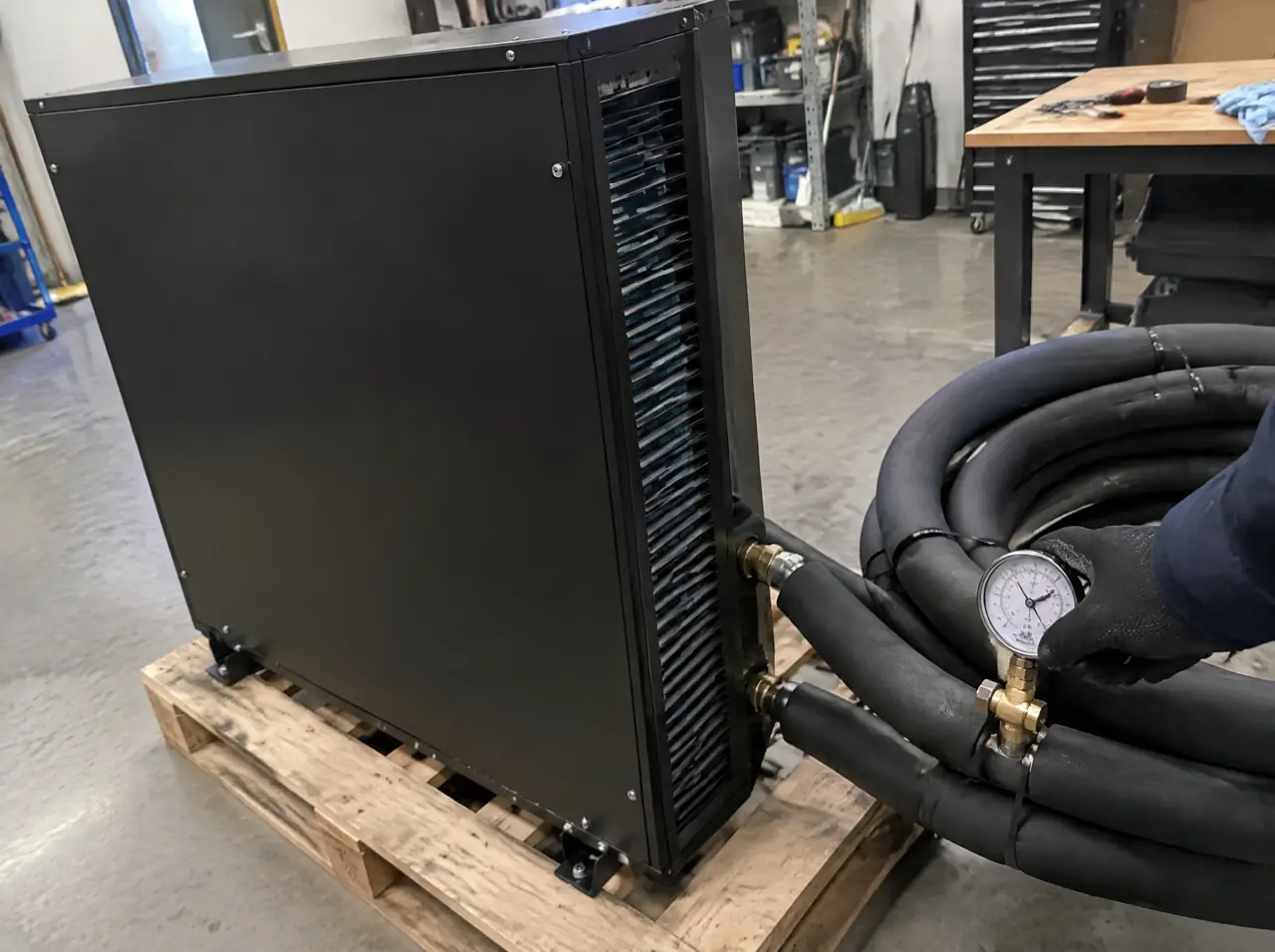
Why Thai air makes chillers work harder
Every chiller throws the heat it takes out of the water into the surrounding air, so the hotter that air is, the less cooling the unit delivers: one that holds a pool at 4 °C in a cool climate may struggle at 35 °C. Our sizing assumes the hot case: one horsepower for up to 260 litres, two for up to 570, four for up to 1,200. The rest of the design is about not asking for more than the table allows: shade over the water, insulation around the shell and lagged pipes.
Sizing by hand, in three lines
- Energy: litres x 4.186 x degrees to remove ÷ 3,600 gives kilowatt-hours. For 1,000 litres from 29 °C to 4 °C that is about 29 kWh.
- Time: divide by the unit's cooling duty. A 4 HP unit moves about 3.6 kW, so a 1,100 litre pool takes roughly nine hours the first night.
- Holding: after that the unit only fights sun, warm air, ground and bathers, and cycles on and off. Shade and insulation decide how often.
| Unit | Holds up to | Cooling duty | First pull-down, full volume | Indicative range |
|---|---|---|---|---|
| 1 HP | 260 L | 0.9 kW | about 8 h | THB 105-140k |
| 2 HP | 570 L | 1.8 kW | about 9 h | THB 140-205k |
| 4 HP | 1,200 L | 3.6 kW | about 10 h | THB 220-330k |
Pull-down times assume a 29 °C start and ignore heat gain, so treat them as a floor, not a promise. Shared pools for hotels and clubs run two units in parallel: one carries the load, one is the margin, and either can be serviced while the pool stays cold.
Where the unit lives
- Air in, air out. The condenser needs free air at the intake and a separate path for the exhaust; the same air must not loop. Louvres are sized for the airflow, not for the looks.
- Shade and ventilation. A niche in full afternoon sun asks the unit for more than the table says; a ventilated, shaded niche gives it headroom.
- Short, lagged pipes. Keep the unit within a few metres of the water. Cold lines in humid air sweat, so closed-cell insulation with sealed joints is standard.
- A condensate drain. Cold surfaces and the unit itself drip; the water has somewhere to go that is not your deck.
- Service access. Half a metre or more of clear space around the unit for a technician; the niche is never sized to the casing alone.
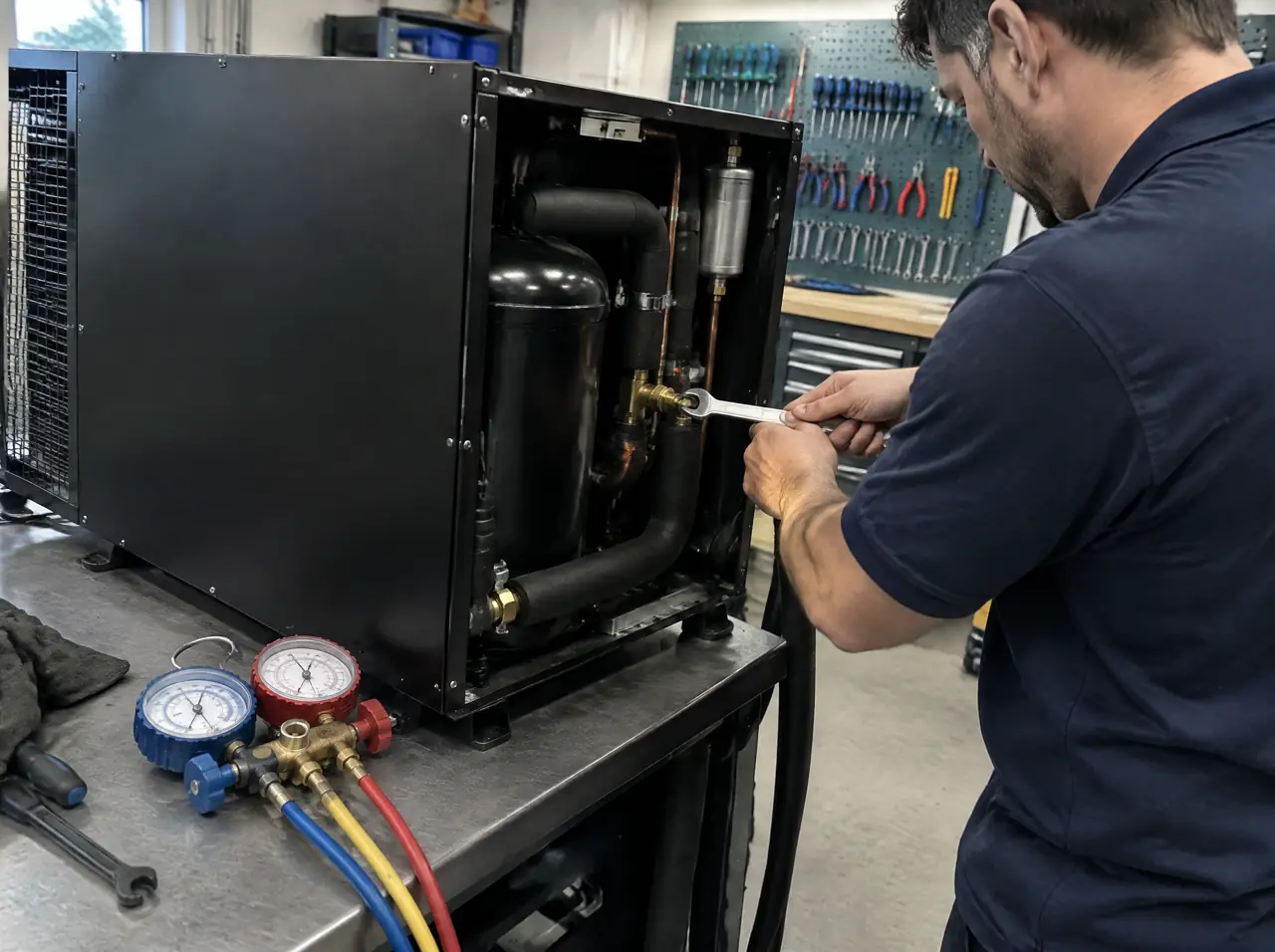
Coast, storms and the supply
On islands and beaches, salt air attacks condenser coils and fixings, so we specify coated coils and stainless hardware where the plant sees the sea. Storms and brown-outs are hard on any compressor: the chiller gets its own breaker and surge protection, and three-phase supply where a 4 HP unit or a pair of them calls for it. The reasoning is in sauna power in Thailand.
Buying a unit for an existing tub or pool
If you already have a pool or a tub, send the litres, a photograph of the plant area and the distance to the water; we size the unit and quote the plant installation. The sizing and running-cost note goes through the arithmetic with an example. For a new build, the chiller comes inside the range of the plunge pool or the duo.
How big a chiller does a 500 litre ice bath need in Thailand?
A 2 HP unit, which holds up to 570 litres at 3-5 °C in 35 °C air. A 1 HP unit will be asked for more than it can give on hot afternoons and will run constantly.
Can a chiller stand outdoors in the rain?
Under a roof or inside a louvred niche, yes. We do not leave a unit exposed to rain and direct sun, because the electrical parts and the coil last longer when they are sheltered and ventilated.
How noisy is it?
Think of an outdoor air-conditioning unit: audible while the compressor runs, silent between cycles. We stand it away from bedrooms and neighbours' windows and put the noise estimate in the layout.
What does it cost to run?
Roughly the compressor's electrical draw, about 0.75 kW per horsepower, multiplied by the hours it runs and your tariff. A 4 HP unit running six hours draws about 18 kWh. The guide works an example.
Other builds
What the chiller keeps cold
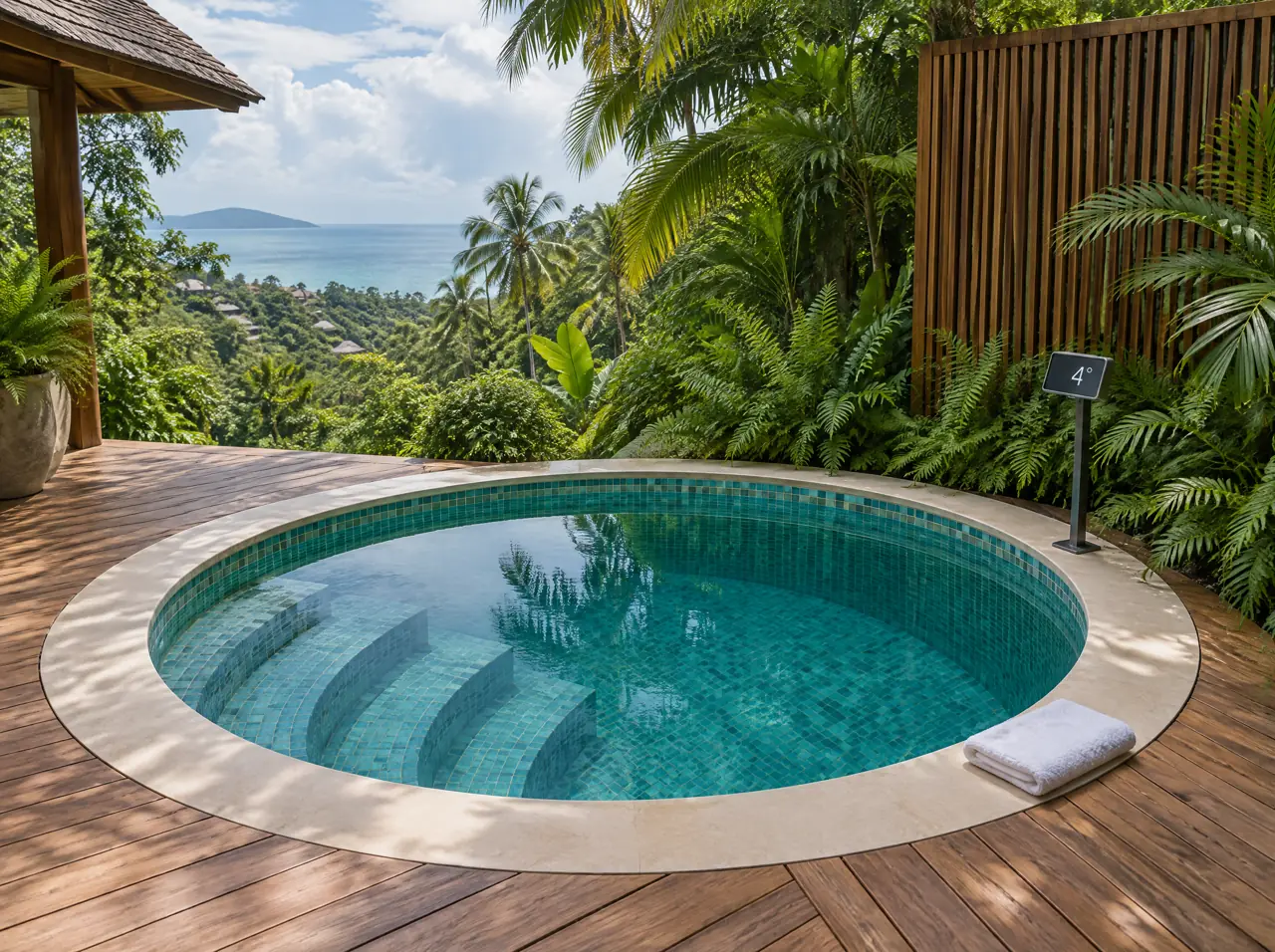
Cold plunge pools
Built-in, about 1,100 litres, mosaic or travertine, held at 3-5 °C by a chiller nobody sees.
Look closer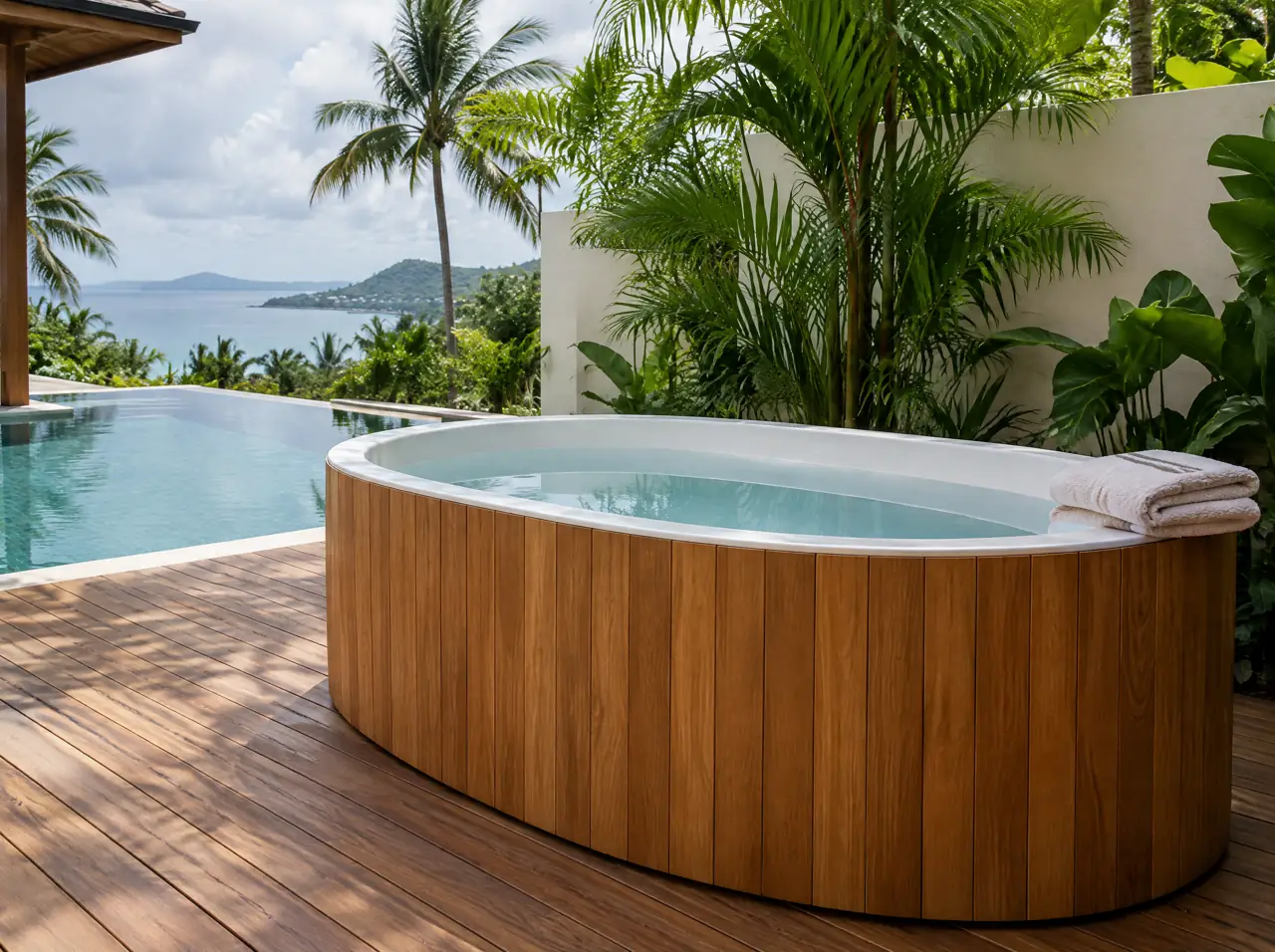
Teak cold tubs
Teak staves, white fibreglass liner, no metal hoops: 420-800 litres, chilled to 3-5 °C, private homes only.
Look closer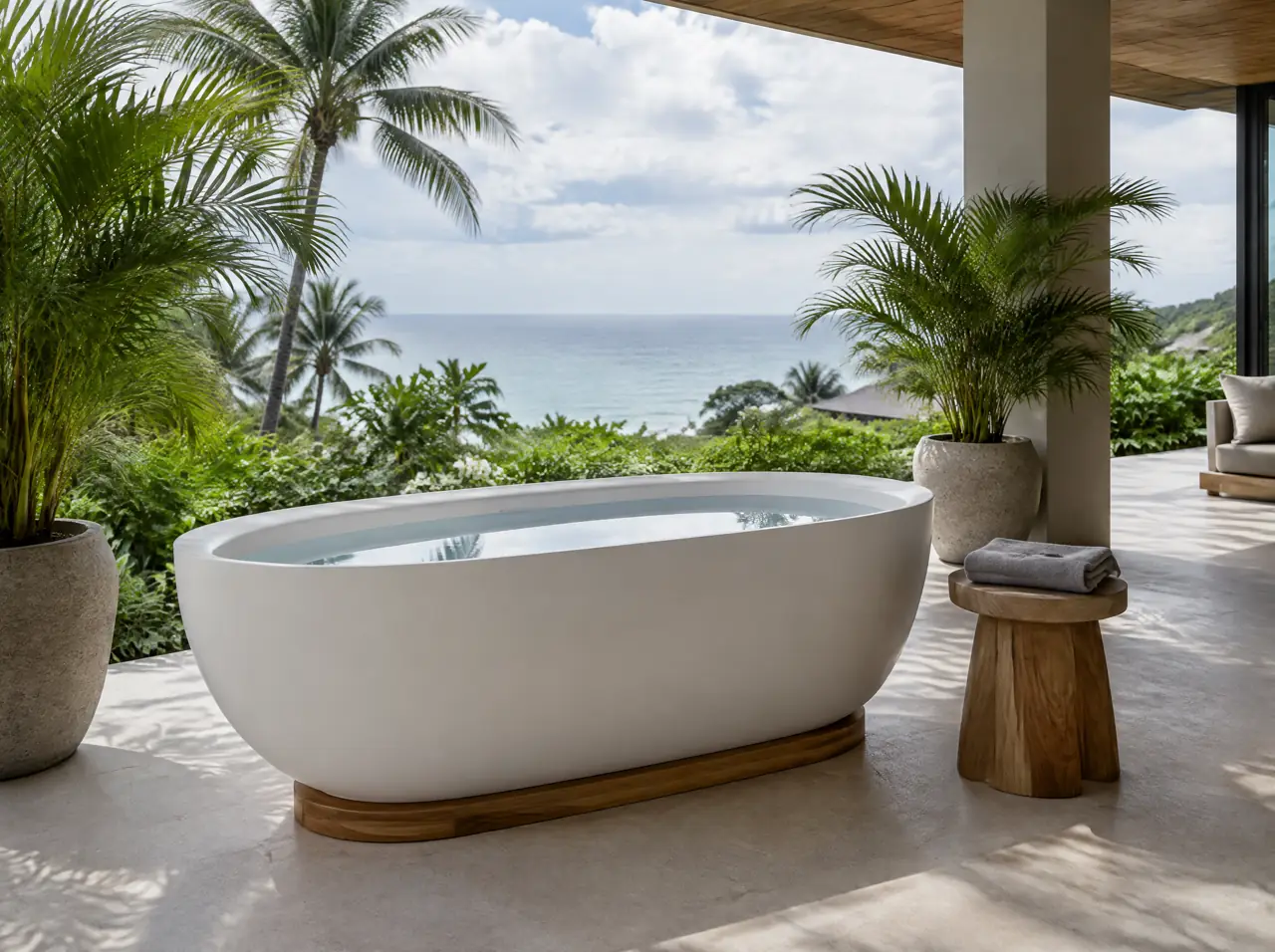
Ice bath tubs
Free-standing, 250-800 litres, for a balcony or terrace: chilled to 3-5 °C, private homes only.
Look closerAbout this build
Tell us the litres, the shade and the distance to the water; we size the unit and the niche
Start with a photograph
Send the corner of the garden, the terrace or the plant room you have in mind. We answer with questions first, then a layout and a range.
Open WhatsAppOr build the circuit yourself