Build no. 9 · the warm side
A built-in hot tub with hydromassage jets, warm when the swimming pool is not
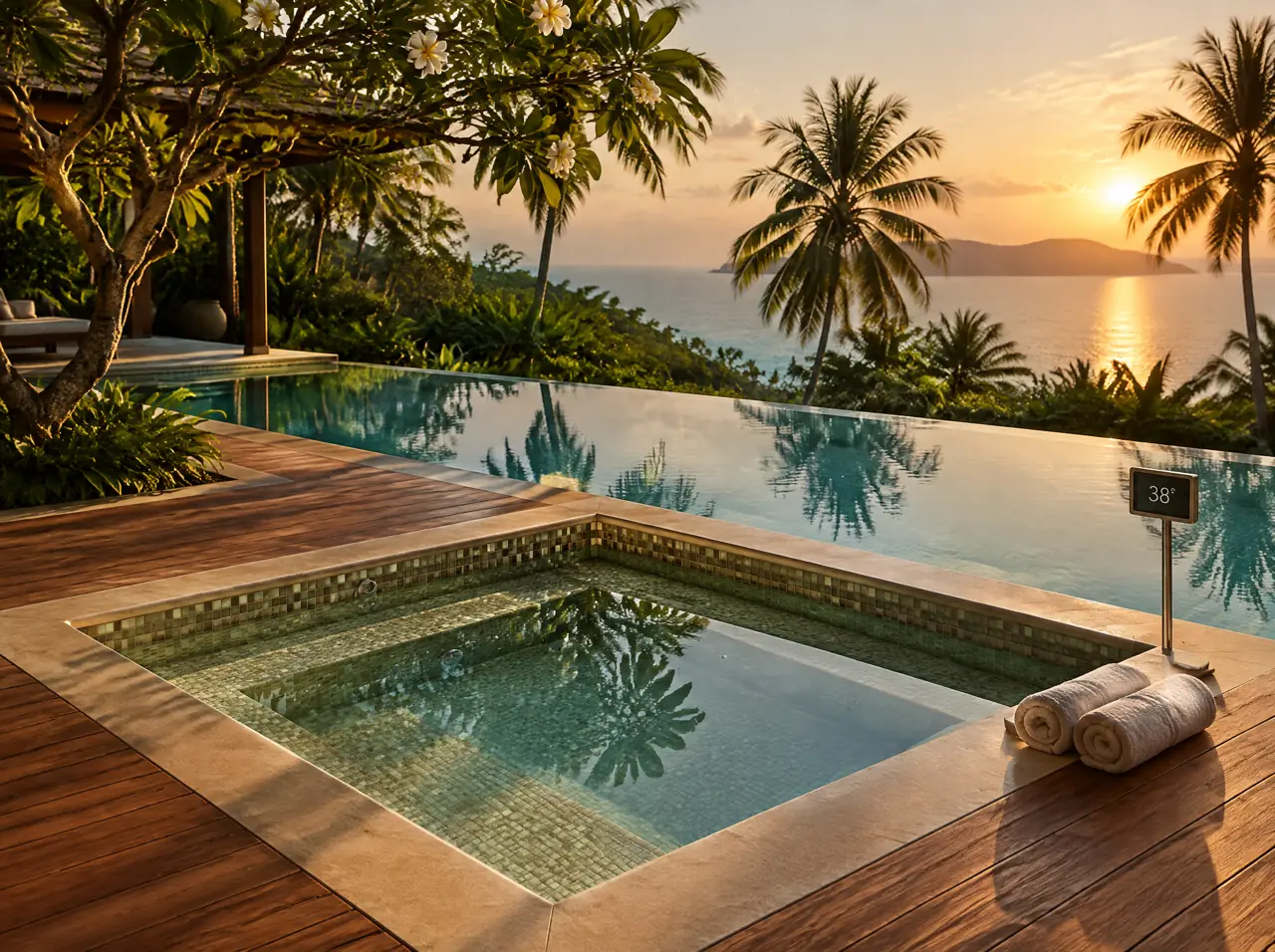
An open villa pool in Thailand settles near the air temperature, which is pleasant and nothing more. The hot tub is the warm seat the terrace is missing: a tiled or acrylic shell for two to six people, 36-38 °C, jets on a timer, a stone ledge to sit on, and a pump, heater and filter that live in a niche a few metres away.
Why a hot tub when the villa already has a pool
Open water finds the temperature of the air around it. Phuket's annual mean air temperature is 28.5 °C (Thai Meteorological Department, 1991-2020 normals, Phuket), so an unheated villa pool spends the year in the high twenties: fine for a swim, useless for a soak. A hot tub does the other job: ten to fifteen minutes at 38 °C with the jets running after a long flight or a padel match, and a guest remembers the villa for that evening rather than for its square metres. Heating two tonnes of water under a cover is a different bill from heating a fifty-tonne pool in the open.
Tiled and built in, or an acrylic shell dropped into the deck
| Format | Seats | Water | Built how | Suits |
|---|---|---|---|---|
| Masonry shell, glass mosaic or tile | 3-6 | 1,800-2,500 L | cast and tiled on site, matched to the plunge pool | villas, resort decks, spa gardens |
| Drop-in acrylic spa shell | 2-5 | 1,200-1,500 L | factory shell lowered into a framed opening in the deck | rooftops, renovations, tight schedules |
The masonry version is the one in the photograph: the same sage-gold mosaic as our warm pools, a ledge at seat height and jets set into the wall below the waterline, so it reads as part of the deck. The acrylic shell is what most guests would call a jacuzzi-style tub; it arrives finished, takes a day to set and suits a rooftop or an existing terrace. Both run from the same plant and both sit inside the THB 295-950k range, the acrylic shell toward the lower end, a mosaic tub for six toward the upper.
What 38 °C costs on a 30 °C evening
Bringing 2,000 litres from a 29 °C fill to 38 °C takes about 20.9 kWh, roughly 3.5 hours on a 6 kW heater; a 3 kW unit takes twice as long and suits a smaller shell. Covered, the tub loses little to 30 °C night air, so the heater cycles for minutes. The jet pump draws 1.5-2.2 kW only while the jets run, and a 20-minute timer keeps that honest. In Chiang Mai's cool season the fill water and the air both start lower, so the heater works harder in December and the tub is used more; the two roughly cancel.
Salt air, afternoon sun and the first monsoon
- Marine-grade stainless on jet faces and rails. The ordinary grade pits within a season in Andaman or Gulf air; fasteners stay under the mosaic.
- A cover that is used. Open at 38 °C under a Phuket sun, the tub collects insects and leaves and drains the heater; the insulated cover is fitted to the shell and hinged where one guest can lift it.
- An overflow for rain. Phuket receives about 2,270 mm a year, most of it from May to October (Thai Meteorological Department, 1991-2020 normals, Phuket); the shell overflows to a drain, not over the coping.
- Afternoon shade. A pergola or a roof edge keeps the coping walkable at two o'clock and the water from drifting above set point on its own.
The plant niche: pump, heater, filter and a drain within reach
Hot beside cold: the tub as the warm half of a pair
The hot tub earns most with a cold neighbour. Beside a cold plunge pool at 4 °C it gives a villa the full contrast routine without a cabin; beside a glass sauna it is the soak after the heat. For the warm side without jets, tiled to match the cold side as one piece, the hot and cold pool duo at THB 700k-1.25M is the built-together answer; the hot tub is the version with hydromassage, a deeper seat and its own plant.
Warm water for guests: the routine, not the promise
Water at 38 °C suits people and everything that grows in water, so a hot tub in a rental villa or a hotel spa comes with filtration sized to the volume, a sanitiser stage, a cover and a one-page routine for the housekeeper: test, top up, backwash, drain and refill to the bookings. If guests pay to use it, ask your provincial public-health office which water standard applies; the hospitality page lists the questions and the budget ranges page the extras a hotel version adds.
Can a hot tub go on a Bangkok rooftop or a condo terrace?
Often, with an engineer's yes. A filled acrylic shell for four weighs around 1.5-2 tonnes with people in it, so the slab, the waterproofing, the drain and the route for the shell through the building are checked first. The drop-in format exists for exactly this case.
How long does the tub take to heat up?
From a fresh fill at about 29 °C to 38 °C, roughly 3.5 hours with a 6 kW heater on a 2,000 litre shell. Between uses it stays covered and warm, so a guest only waits for the cover to come off.
Is 38 °C pleasant in the hot season?
At midday in April, no, and nobody pretends otherwise. Hot tubs in Thailand are evening and cool-season equipment, which is why we place them where the breeze reaches after sunset and why the display lets you run 36 °C in the hot months.
Other builds
The cold side it pairs with, and the steam room next door
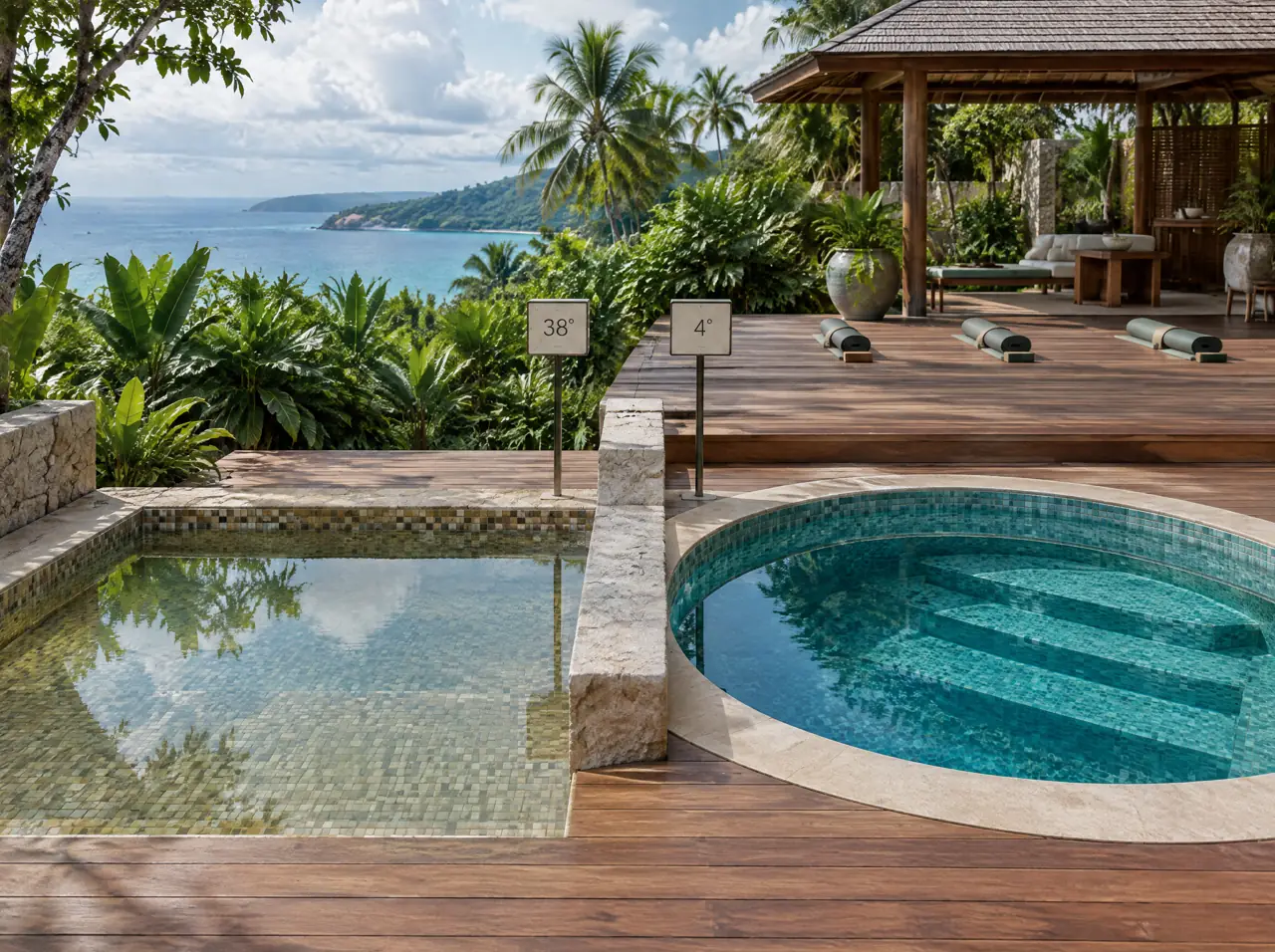
Hot + cold pool duo
A 38 °C soaking pool next to a 4 °C plunge pool, one plant room, two mosaics that talk to each other.
Look closer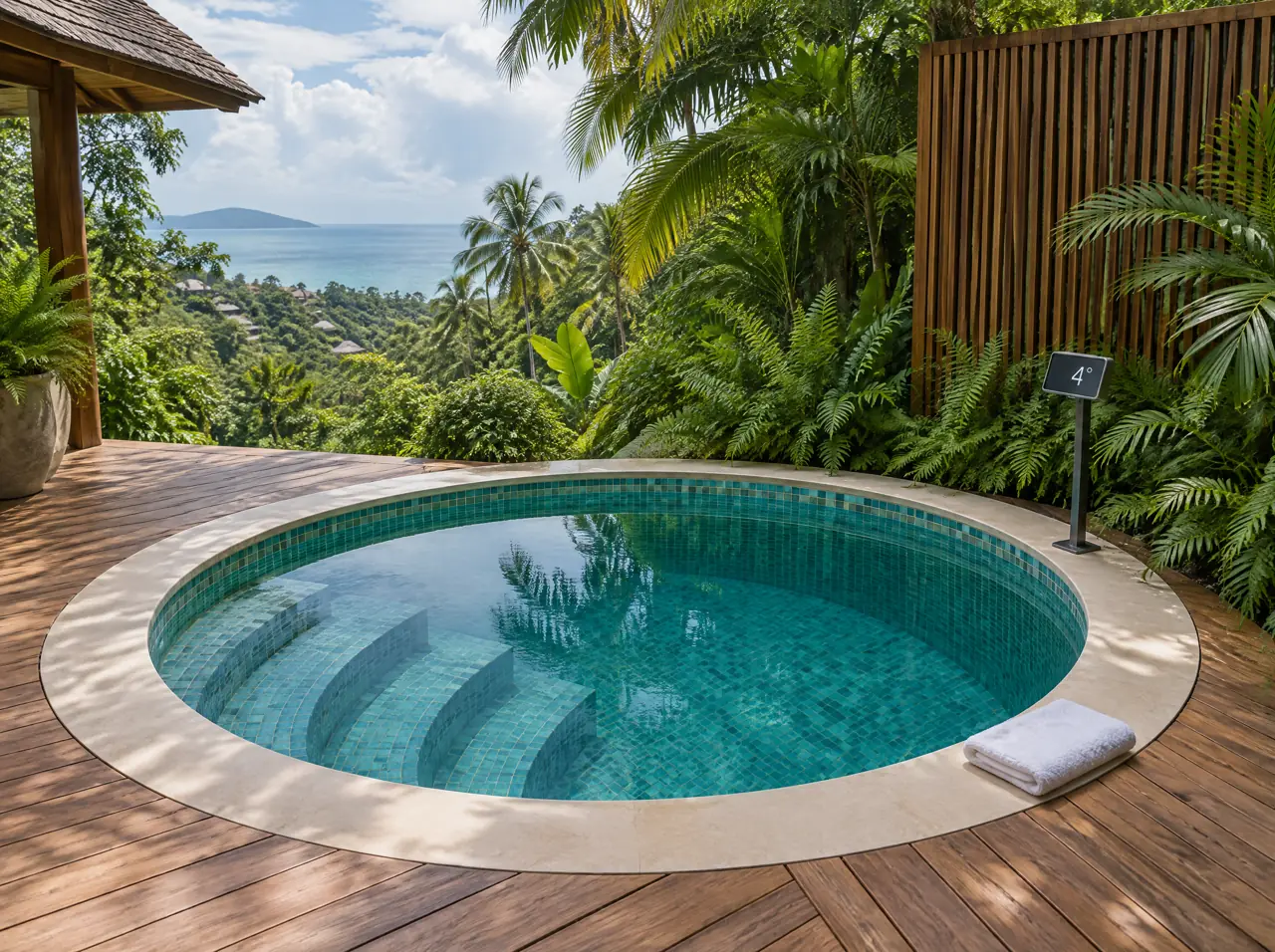
Cold plunge pools
Built-in, about 1,100 litres, mosaic or travertine, held at 3-5 °C by a chiller nobody sees.
Look closer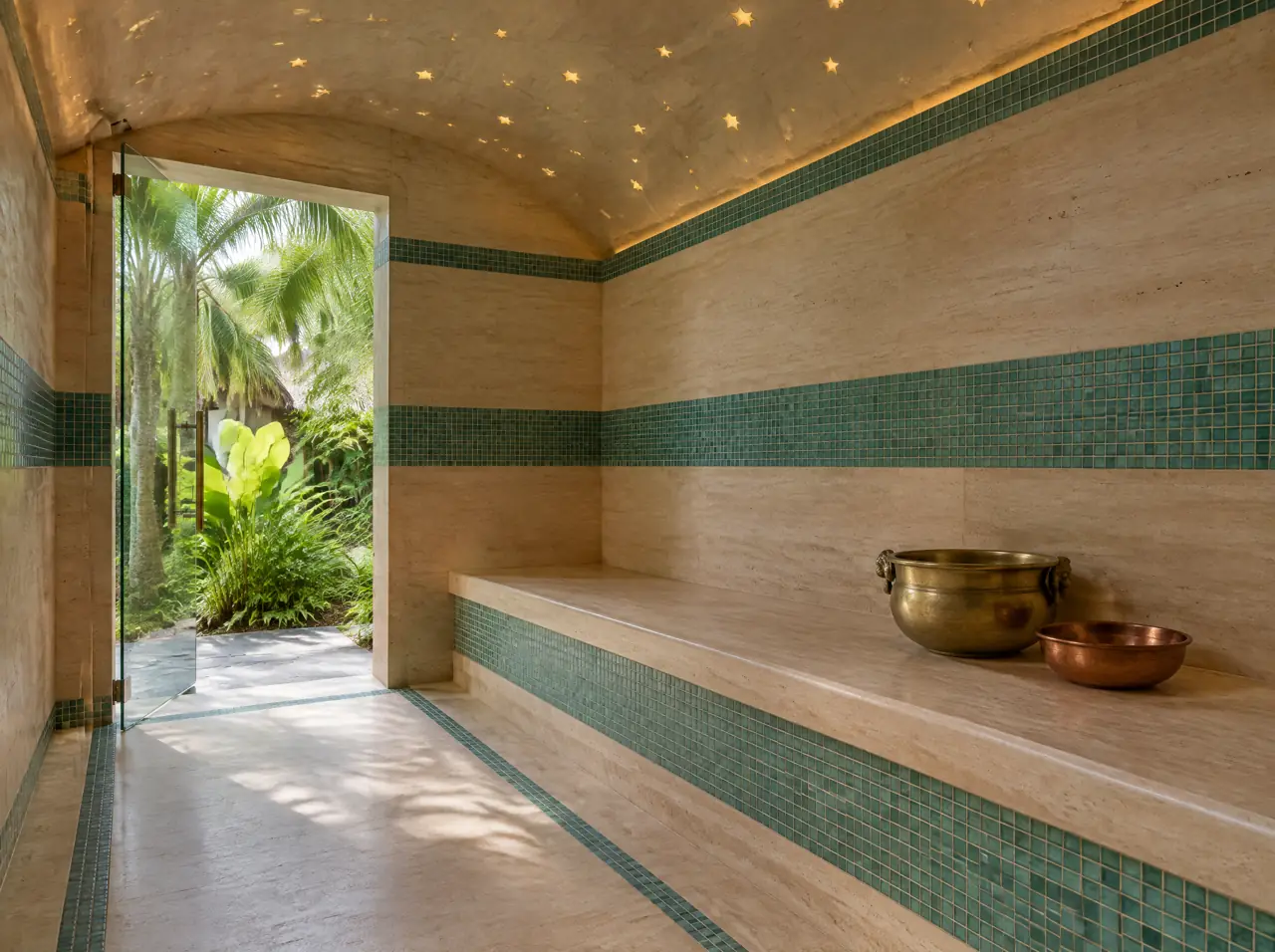
Hammam and steam rooms
Travertine or mosaic steam cabins for 2-8 people, 43-48 °C at full humidity, 6-15 kW generator in a cupboard next door: spa hotels, gyms, clinics, homes.
Look closerAbout this build
Send the deck plan with the pool marked; we place the hot tub where the evening breeze reaches it
Start with a photograph
Send the corner of the garden, the terrace or the plant room you have in mind. We answer with questions first, then a layout and a range.
Open WhatsAppOr build the circuit yourself